Two of America’s largest meat companies — JBS and Tyson Foods — have invested in a smartwatch application that allows managers to monitor workers’ movements.
The startup behind the application, Mentore, claims to improve worker productivity while reducing injuries. The repetitive, fast and taxing work of cutting and packing protein makes meat processing plants some of the most dangerous workplaces in the country. Despite workers’ pleas, meat companies have fought to increase the pace of work.
The investments signal that the big meat companies could follow in the footsteps of other industries that have increased surveillance in an attempt to improve worker productivity. Amazon, in particular, has come under fire for using tracking technology to speed production so much so that, in at least some cases, its delivery drivers have not had time for bathroom breaks.
Experts said the use of digital technologies and AI to manage workers can have negative effects, such as increased stress and injuries, particularly when companies use the technology to make disciplinary decisions.
“Our hypothesis is that if you have implemented good, safe methods for the workers, they are going to be productive as well,” Mentore co-founder and CEO Apoorva Kiran said. “What we demonstrate to our customers is that, ‘Hey, we fix your training and safety concerns and see — your workforce is happier, more productive, efficient, and they stay longer.’ That's what the approach is, not the other way around.”
Tyson Ventures, the venture capitalist branch of Tyson Foods, was one of the initial funders of Mentore, along with Monozukuri Ventures and Threshold Impact Fund. Together, the three funders have contributed $4 million to Mentore, Kiran said.
JBS “partnered” with Mentore — then called Iterate Labs — in October 2020, according to a press release issued by Rev: Ithica Startup Works, a business incubator and startup workspace in Ithaca, New York, where Mentore is based.
“The Iterate Labs safety wearables and analytics platform will provide us insight into how each employee responds to ergonomic and process changes by digitizing individual worker motion,” said Chris McCune, JBS USA Fed Beef Safety Director, in the press release. “Up until now, collecting and analyzing data at the operator level was very challenging, but now we have the ability to improve the health and safety of every single one of our team members.”
Kiran declined to disclose details of how Mentore’s system is being used by any specific company, including the nature of their partnership with Mentore, the number of watches currently using the app and the locations of the plants where the application has been tested or implemented.
Kiran did say the app had been installed on 10,000 devices across five industries in four countries: the United States, Canada, Chile and Japan.
JBS and Tyson did not respond to multiple requests for comment over the course of a month. But the companies praised the technology in press releases.
“At Tyson Ventures, we are continually exploring new areas of technology and artificial intelligence that can improve the health and well-being of our team members,” Tyson Ventures director Rahul Ray said in a March 2021 press release announcing Tyson Ventures’ investment in Mentore. “We believe Iterate Labs’ Industrial IoT (Internet of Things) platform could be a game changer driving real-time visibility, safety and productivity for the North American manufacturing workforce.”
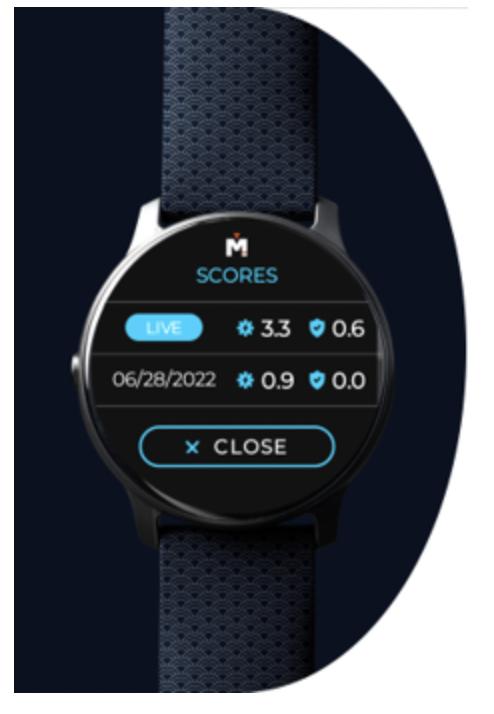
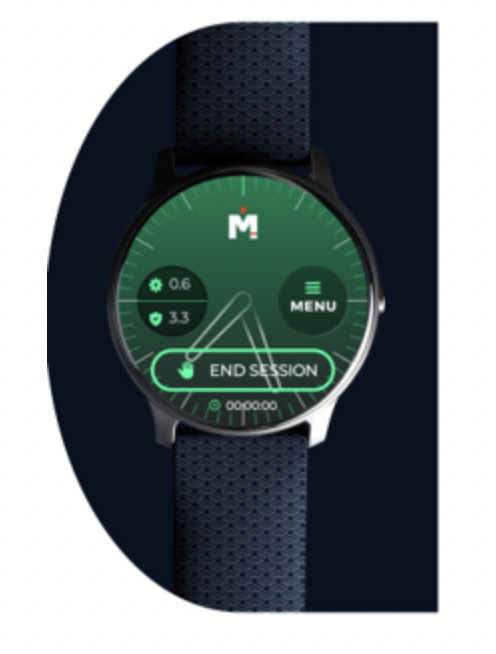
The Mentore application is compatible with the Samsung Watch 4, which uses sensors to constantly collect data on the force, rotation, speed and directional movement of a worker’s arm as they perform the same motion over and over. Mentore’s AI algorithm then interprets the data to determine if the movement is safe, and notifies the worker if they’re exerting too much force or speed.
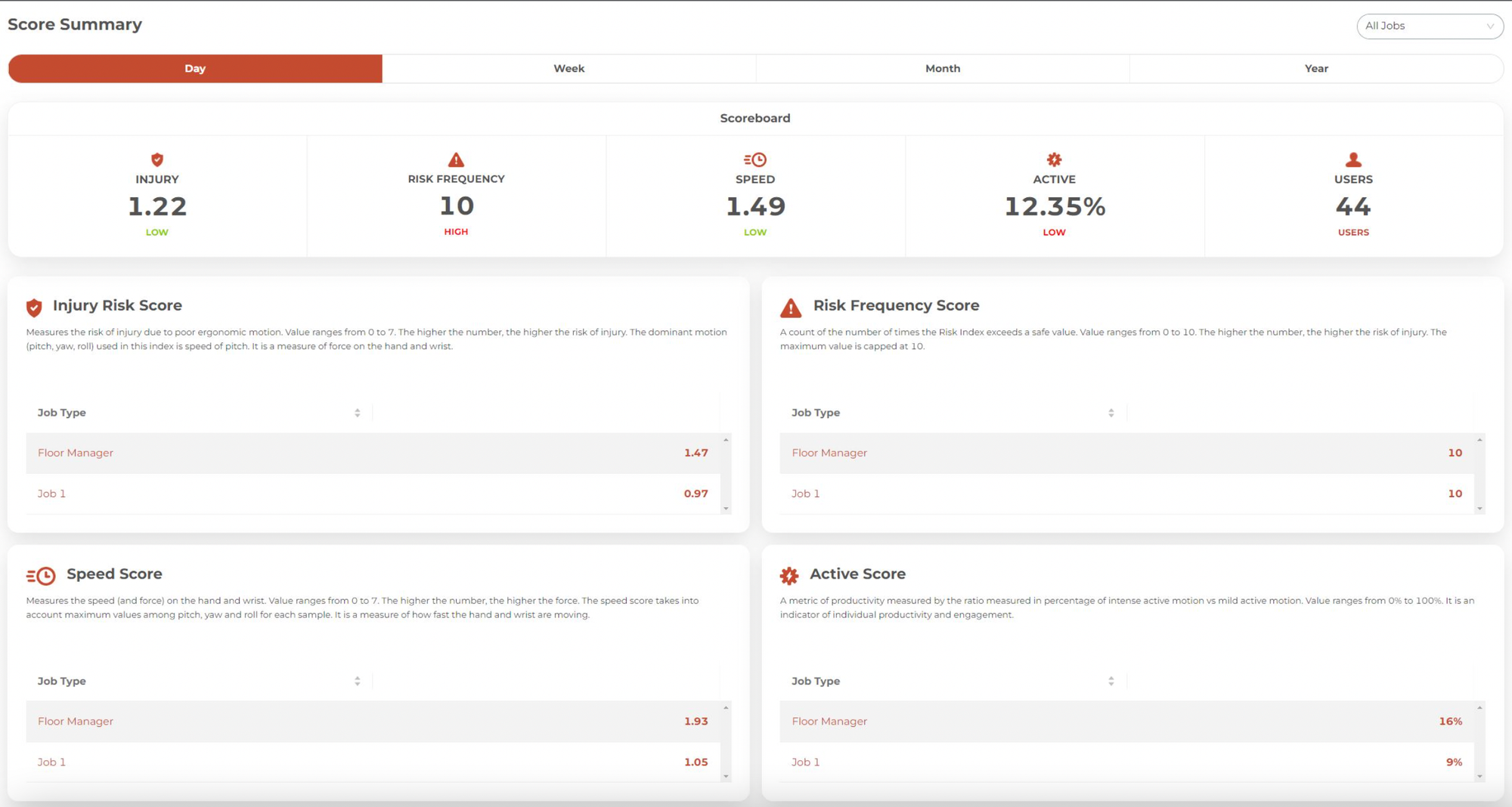
The watch feeds information 10 times per second to its AI algorithm, which converts the raw data to metrics, visible by supervisors on a dashboard.
That dashboard not only includes safety metrics, but also an “active score,” described on the dashboard as “a metric of productivity measured by the ratio measured in percentage of intense active motion vs. mild active motion…It is a measure of individual productivity and engagement.”
Experts, workers' groups wary of increased monitoring
Kiran estimated that 80% of the workplaces using Mentore’s app are unionized. In those workplaces, the company only deploys the Mentore app after getting a nod from the union, Kiran said.
A representative of United Food and Commercial Workers, the union representing meatpacking workers, said the organization was not aware of the Mentore app being used in any UFCW plants. The union’s international administration declined to share UFCW’s position on AI and digital monitoring technologies in the workplace.
At least one local union president said watches with the app wouldn’t be welcome.
“We wouldn’t allow that,” said Roger Kail, UFCW Local 1155’s president, who represents JBS workers in Marshalltown, Iowa.
Some experts said productivity metrics can be harmful to workers, especially when they’re tied to disciplinary systems.
Amazon has been criticized by workers and privacy experts for using AI applications to track employees and discipline or fire them when the app detects underperformance.
It’s ultimately up to the companies contracting with Mentore to decide if, like Amazon, the technology will be tied to discipline or benefits.
Many meatpacking plants currently use a point system for discipline, adding a point to an employee’s record when that person arrives late, misses a shift or breaks a rule. Once the employee accumulates too many points, they’re subject to being fired.
‘It just creates a sense of paranoia’
Immigrants, contract workers and those without union protection are more likely to be surveilled in the workplace than other demographic groups, according to Mona Wang, a Ph.D candidate at Princeton's Center for Information Technology Policy, who researches control and surveillance technologies.
The groups at the highest risk of workplace surveillance are prevalent in meatpacking. Animal slaughtering and processing workers are more than twice as likely to be immigrants compared to the entire U.S. workforce. Of the foreign-born workers, 70% are non-citizens, according to the Economic Policy Institute.

Only one-third of poultry processing workers are unionized through the UFCW.
“People with fewer rights, especially at the workplace — because there’s this power imbalance and this huge power difference that's exacerbated — tend to be surveilled more,” Wang said.
Irene Tung, senior researcher and policy analyst at the National Employment Law Project, said these power imbalances are amplified in part because increased surveillance by technology means one manager can supervise more people, increasing the ratio of workers to managers, Tung said.
Monitoring devices using AI algorithms are especially damaging to workers’ when the employees do not have access to the data that is being collected, and when they don’t have the ability to contradict the algorithm or explain a drop in productivity to a supervisor, Tung said.
“Non-transparency creates a climate of fear,” Tung said. “It just creates a sense of paranoia where…the feeling is that if you're not constantly moving, you might be fired.”
Workers using the Mentore watch application can view their current and historical Active and Injury Risk scores. Kiran did not respond to a question about whether workers can challenge the Mentore app’s metrics through the watch itself.
Despite having one of the highest injury rates in the nation, the meat industry has supported measures, most notably the USDA’s New Swine Inspection System, which would increase line speeds at processing plants.
Meatpacking plants have always closely supervised frontline workers, said Magaly Licolli, executive directory of Venceremos, a worker-based organization in Arkansas that advocates for poultry workers.
In one plant, supervisors would write down exactly what time an employee left to use the bathroom and what time they returned, Licolli said.
In “quantified” workplaces like meatpacking plants, a worker’s productivity can be easily measured with quotas or production targets, according to Kathryn Zickuhr, a labor market policy analyst at the Washington Center for Equitable Growth, a nonprofit research organization focused on economic growth.
But digital technology collects and stores data much faster and in much larger quantities than humans alone are capable of.
“Because you have so much data, you reach the limits of an individual person's ability to sort through it,” Zickuhr said. “In order to process that data and get any meaning out of it, you need technologies to do that.”
Bringing white-collar workplace systems to manufacturing
Mentore’s AI algorithm is based on the Rapid Upper Limb Assessment (RULA), a method developed by ergonomists to determine the risk associated with certain arm movements, Kiran said. Mentore adjusts the algorithm to fit each “process” within a workplace, customizing it to each workers’ job.
The system sends a notification to a workers’ watch when that employee is overexerting themself, when they perform a movement in an unsafe manner and when the watch detects dehydration, Kiran said. The workers’ safety, speed and productivity metrics are only visible on the management’s dashboard.
Kiran founded Mentore in 2016 with fellow Cornell University Ph.D student Jason Guss. The two received support from Cornell’s eLab to develop a tool that would proactively collect data to prevent workplace injuries. Their first prototype was a glove with sensors in it, but the gloves were difficult for workers to wear on the job, so the company shifted its focus to smartwatches, Kiran said.
The idea was to bring the kinds of high-tech workplace systems available to white-collar workers to those in manufacturing, warehouse and processing jobs, Kiran said.
Mentore focused on developing social distancing technology in 2020 when the coronavirus pandemic first hit the U.S. When the pandemic began to subside, Kiran and Guss re-approached their customers to sell them the current iteration of the Mentore system.
Guss left the company to take a position at Google in 2021. The company employs 12 people total and plans to continue fundraising and growing its customer base in the U.S., Canada, Chile and Japan in the coming years.
Mentore advertises itself as a solution to the turnover and injuries that have long plagued the meat industry. But workplace monitoring systems do not address the root causes of high turnover such as low pay, long hours and scarce breaks, Zickuhr said.
“If a company turns to an algorithmically-driven technology solution for issues that are driven by much deeper structural causes,” Zickuhr said, "they might end up in a place where they have not addressed the structural cause but have now added this layer of surveillance and data collection on top of it, which itself can be stressful and harmful to workers.”
Top image: Light silhouettes a man as he exits under the JBS sign at the JBS facility Sunday, June 6, 2021, in Greeley, Colorado. (Photo by Joshua Polson for Investigate Midwest)