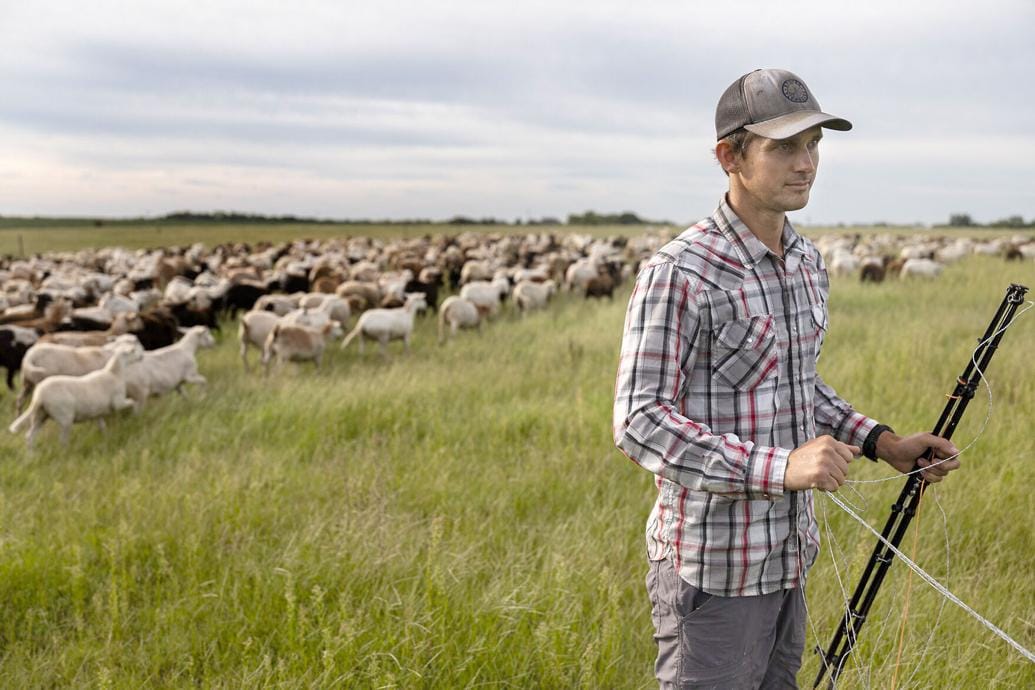
Early on a cool September morning, farmer Josh Payne tends to his flock in Concordia, just east of Kansas City, Missouri. As Payne opens the gate, about a thousand sheep round the corner and bound into fresh grass.
The pasture the flock grazes was once corn and soybeans, along with the rest of the Payne family farm. Josh’s grandfather Charles Payne cultivated nearly a thousand acres of row crops for decades.
But as Josh Payne took over managing the property about 15 years ago, that wasn’t going to work anymore.
“I found out I’m allergic to herbicide,” he said. “My throat would swell shut three or four times a week during harvest.”
Payne wanted to transition the farm to regenerative agriculture — a movement that aims to revive farmland soil and by extension the ecosystem and the small farm economy.
He hoped that by changing what and how they farmed, it would reduce the need for chemical inputs and farm with nature. Josh told his grandfather they should use cover crops, graze sheep and plant an orchard. But Charles Payne wasn’t having it.
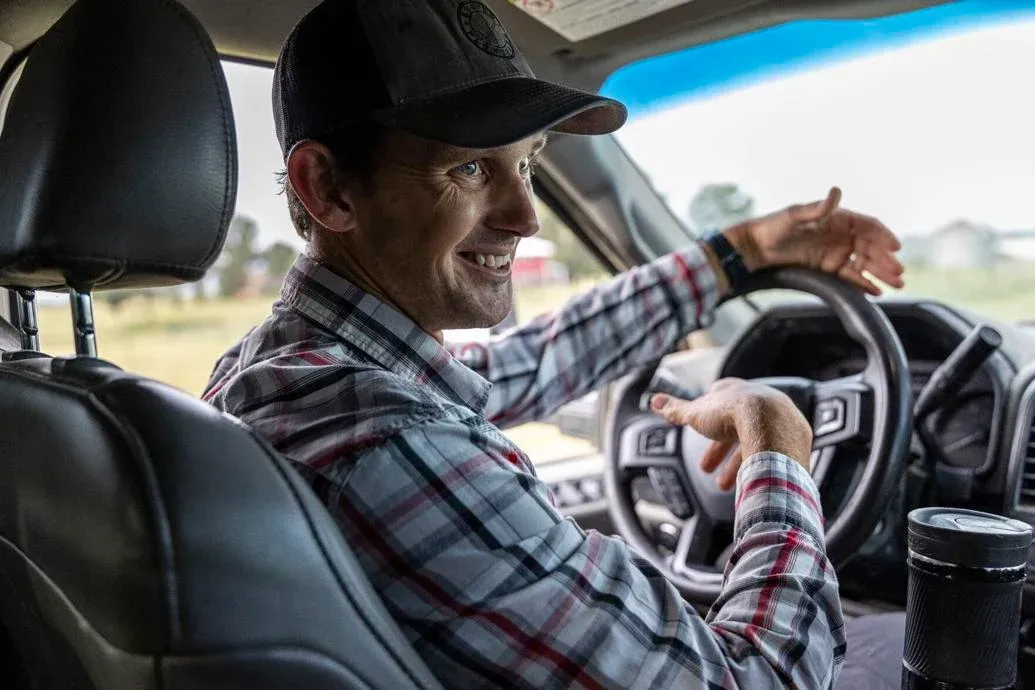
“I’m like, ‘Grandpa, we should do this.’ He’s like, ‘No, we’re not planting trees!’” Josh Payne said. “Literally. His phrase was, ‘I spent my whole life tearing out trees. We’re not gonna go plant them now.’”
Josh said he and his grandfather had similar disagreements, and even arguments, about many changes Josh hoped to make on the farm.
“We went through a really interesting process because I’m stubborn and he’s stubborn,” he said.
Mid-century farm revolution
Charles Payne, 96, came of age during an industrial and chemical revolution in agriculture. Like countless other Midwestern farmers, he heeded the advice from industry and government leaders to “plant fence row to fence row” to increase the production of commodities.
“And that’s what we did … tore out all the fences and hedgerows,” Charles Payne said. “Now I wish I had some of them back.”
U.S. agriculture production tripled in the latter half of the 20th century, due in part to chemical inputs. But that came with an environmental cost — soil degradation, water quality issues and a loss of biodiversity.
The resurgence of regenerative or environmentally sustainable agriculture is partially a response to the industry’s contribution to climate change and its susceptibility to it. There’s now a surge of funding, research and education to figure out how to scale regenerative agriculture and turn away from equipment and chemically intensive ways of cultivating crops.
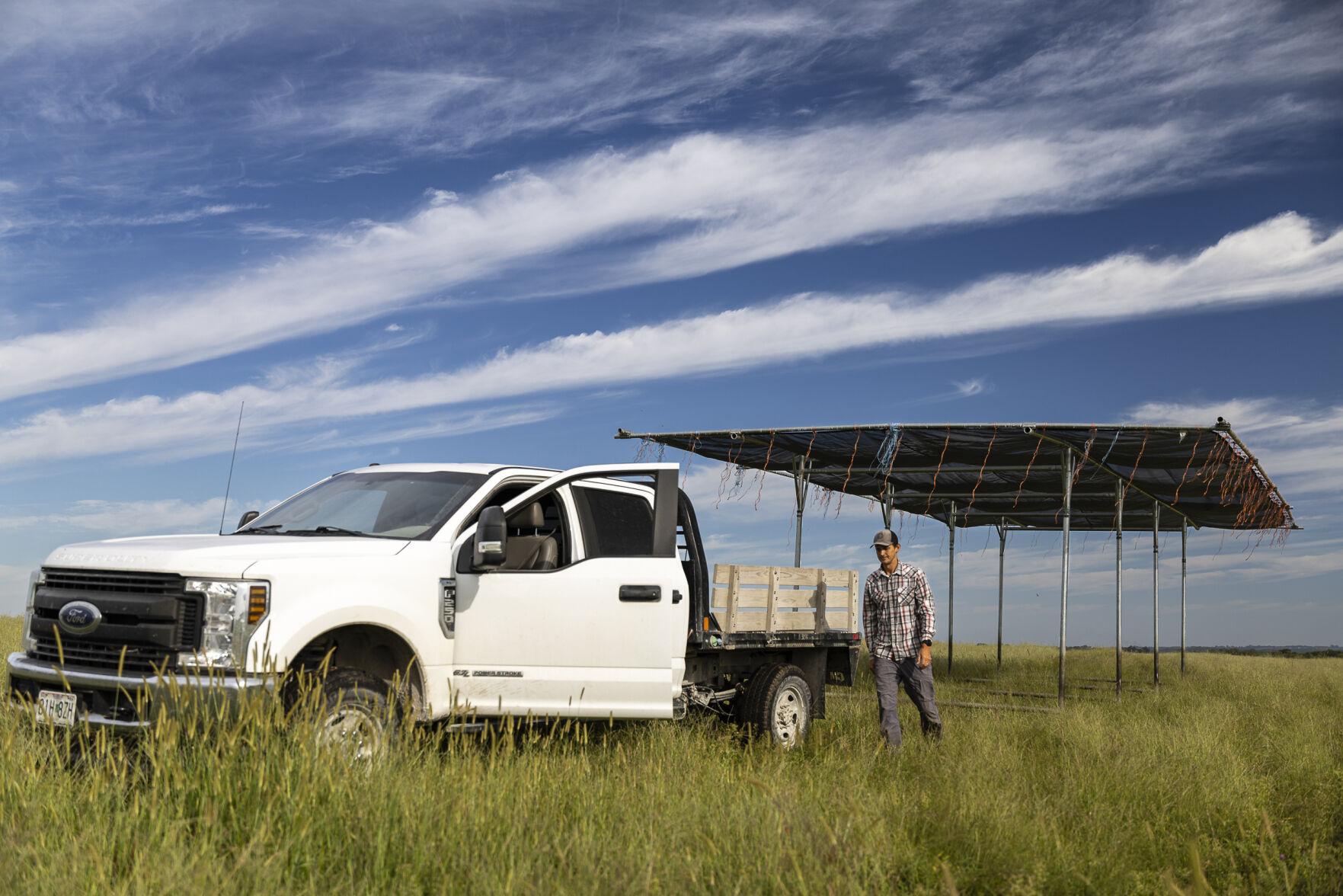
But University of Missouri rural sociologist Mary Hendrickson said the way Charles Payne farmed was also a result of policy, research and methods encouraged by the industry at the time. Before the ecological consequences were understood, chemical inputs were “miracles” for a farm.
“Everybody who was going to be an advanced, innovative farmer, they were using chemicals for weed control, for pest control, for all of these things,” she said.
Hendrickson said for a certain generation of farmers, their skepticism or resistance to regenerative agriculture is a result of their lived experience.
“There’s a reason why somebody who has lived through that transition says, ‘Wait, you want me to go back to what?” Hendrickson said.
The advice Charles Payne’s grandchildren, Josh and his sister Jordan Welch, are getting is sometimes the exact opposite of what he was told in his day.
Hendrickson said this isn’t unique to agriculture. There are many things in life that people do differently than their grandparents’ generation — such as cooking, cleaning or child rearing.
“The things that my mother did to raise me were not in vogue when I was born, and they were (again) 20 years later,” she said.
Generational legacy
Farming isn’t Josh Payne’s first vocation. After teaching English for years, he said he ended up back on the farm “completely accidentally” when his grandfather requested help managing the land about 15 years ago.
“When we got here it was a very, very conventional farm. Everything was commodity, corn and soy. Everything was Roundup ready. Everything was genetically modified,” Josh Payne said. “I call it growing nickels and dimes.”
Payne wasn’t exactly happy row cropping, and he was curious about trying other methods. But when he discovered his allergy to herbicides, it was a catalyst for change.
“Grandpa, I’m either going to have to go back to teaching or we’re going to have to completely change what we do,” he told Charles Payne.
The Paynes now rotationally graze their sheep among 800 chestnut trees — a method called “silvopasture,” which revives the soil by keeping living roots in the ground year round. They planted the trees eight years ago and are completing their third harvest.
Before the flock of sheep was added to the operation, the Paynes cultivated conventional crops in between the orchard rows that are spaced 30-feet apart — a regenerative method called alley cropping. The Paynes are still finding ways to grow and adapt, most recently by adding a produce garden.
Charles Payne has been farming the stretch of land in Concordia since 1956. He said corn, soy and wheat were the “going” crops at the time.
“We had some good years and we had some very poor years too,” he said.
Josh Payne said his grandfather has a deep knowledge of the land and the industry and now acts as a mentor and adviser to his grandkids.
Although he said he’s had to learn to bite his tongue at times during this transition, Charles Payne said he’s happy they are farming.
“That’s a good thing to have your grandkids farming where you left off,” Charles Payne said. “Of course, it’s a different way of farming, but they’re on the farm, and they seem to really enjoy it.”
For Charles and Josh Payne, the elder’s resistance to change and the younger’s desire for change were both motivated by the goal to keep the farm alive. Josh Payne said the markets for sheep and chestnuts are good and support jobs for him and his sister. He said they’re comparable to the markets his grandfather had for corn, soy and wheat decades ago.
“Grandpa, you made the right decisions for your time,” he said. “You were faithful to this land, to this place, to your family … but that just looks different now.”
Rural sociologist Hendrickson said in agriculture communities especially, there exists a generational pressure to farm and to succeed doing so.
“This identity as a farmer and the land and holding that for the next generation was significant for farmers,” she said.
For years farmers heard that to be successful in modern agriculture, they’d have to get big or get out. Payne thinks there’s another option.
“I think people either got to get big or get weird,” Josh Payne said. “We chose to get weird.”
‘The new old way’
Regenerative agriculture starts with the soil. The health of farm ground is connected to the financial viability and resiliency of the farm, said Chuck Rice, a professor at Kansas State University.
“We’ve lost 50% of our soil organic matter with 100 plus years of cultivation in the United States,” Rice said. “So we aren’t taking care of our soils.”
Methods like those Josh Payne has implemented on the Concordia farm revive — or regenerate — the soil and by extension the ecosystem. Regenerative agriculture methods aim to not only restore farmland to its prechemical and industrial state, but to help the land withstand the severe weather threats from climate change.
“Not only is the economy changing, but the climate’s changing,” Rice said. “I think if you’re staying with the same practices … ultimately you’re going to be losing out.”
Reducing or eliminating tillage of the soil, a practice called “no till,” is often the first step for farmers looking to operate more sustainably. Rice said market forces can sometimes jump start changes in the agriculture industry. In order to till fields, farmers need diesel fuel to power their equipment. That gas was highly priced during the 1970s fuel crisis, which made no till more popular, Rice said.
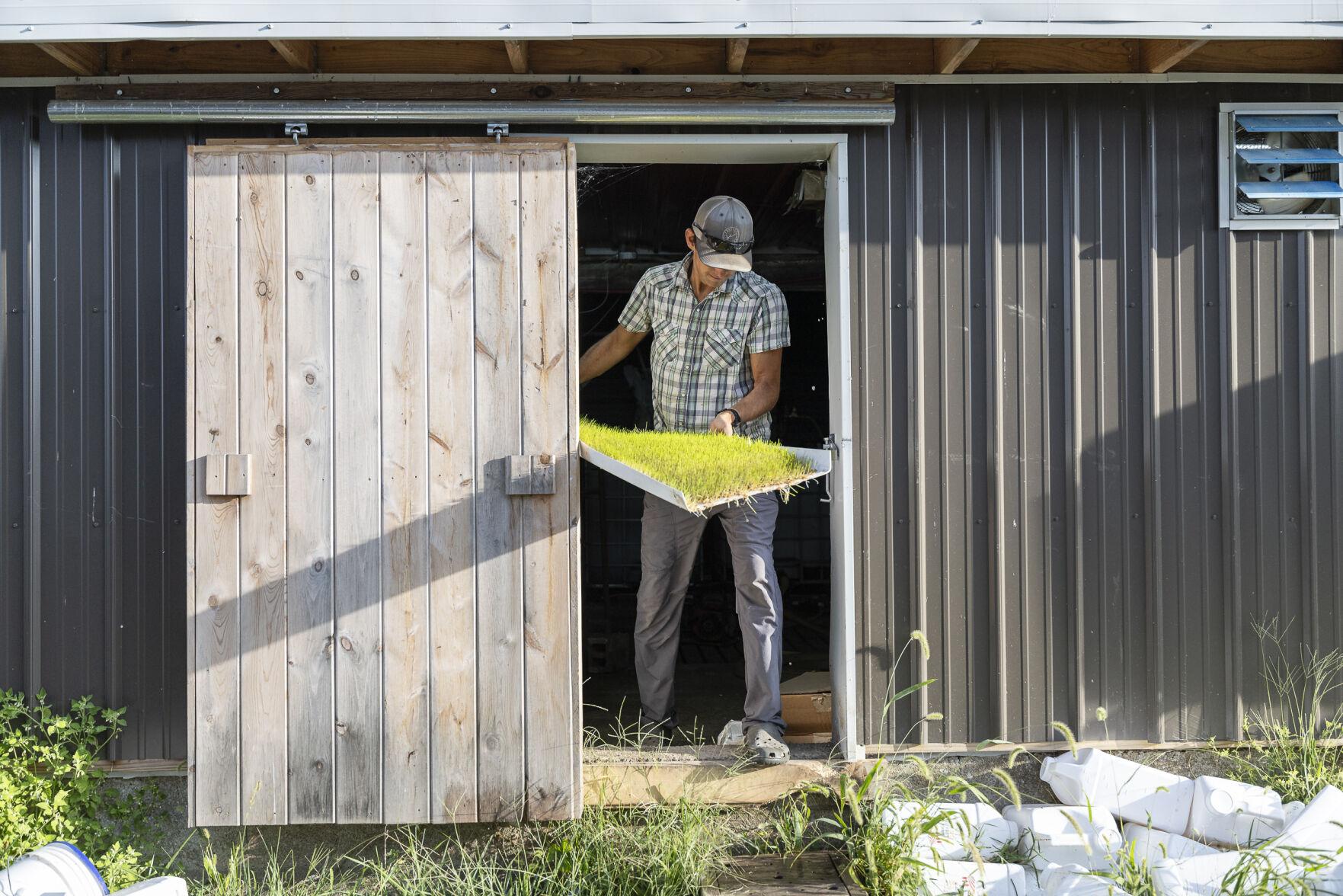
“There was a quick, rapid adoption of no till during that time period,” he said.
Two generations later, no till continues to steadily spread. Rice said Kansas farmers are leaders in no till operation, encompassing about 40% of the state’s farmed acres.
“We still haven’t reached its peak, but it’s one of the more common practices,” Rice said.
Cody Jolliff is a farm historian and the CEO of the Midwest Center for Regenerative Agriculture at Powell Gardens, a botanical garden in Kansas City.
The Powell Gardens’ Midwest Center for Regenerative Agriculture is creating a living laboratory for farmers to come to Kansas City and get hands-on experience in regenerative agriculture methods. Or as Jolliff said, to learn “the new old way” to farm.
He said in many ways, regenerative agriculture is a return to the farming of another era.
“It’s really interesting though, because as we are going to these super modern methods, they also have a lot of resemblance to old methods,” he said.
Before the Civil War, over half of the country’s residents were farmers, Jolliff said, and they worked with small parcels of land in diversified operations. The modern regenerative agriculture movement encourages that same type of farm diversification.
Jolliff said agriculture has changed before and can change again. He points to the success of the 1914 Smith-Lever Act that created the cooperative extension programs that work from land-grant universities to teach farmers across the nation.
“It takes a long, long time for agriculture methods to change,” he said. “This is not going to be an overnight thing. It’s a huge investment right now across the country into these practices.”
Cory W. MacNeil contributed reporting for this story.
A KBIA News Series exploring what needs to change to sustain agriculture. Reported and produced by Jana Rose Schleis. Logo designed by Harrison Petty.