


Investigate Midwest’s editor-in-chief Ben Felder appeared Feb. 19 on Iowa Public Radio’s River to River with the launch of his latest investigation into pesticide use and cancer rates in the agricultural heartland.
“Iowa has the second highest cancer rate in the country…” host Ben Kieffer said at the start of the program. “Every year, we know farmers use tens of millions of pounds of pesticides, and for a long time, those two facts have just kind of sat there side by side without a lot of official explanation.”
A major new investigation by Investigate Midwest takes a hard look at whether they are, in fact, connected, drawing on data from the U.S. Geological Survey and the National Cancer Institute and more than 100 interviews with farmers, scientists and lawmakers.
As part of a StoryReach U.S. Fellowship with the Pulitzer Center with support from the Fund for Investigative Journalism, Felder said his reporting grew out of an open call launched last year inviting people to share their experiences. Many responded, including individuals who did not want to go on the record but wanted their experiences acknowledged and reflected in the reporting.
Felder said that in agricultural states like Iowa, multiple factors are often cited in talks about cancer risk, including fertilizer use, industrial farming, water contamination, and radon — and those overlapping exposures can make it difficult to isolate any single cause.
Read the full story

Pesticide use and cancer risk rise together across America’s heartland
That’s why Investigate Midwest focused specifically on pesticides, not to argue they are the sole cause of cancer, but to examine whether a measurable relationship exists, he said. The reporting drew on scientific research that has increasingly linked pesticide exposure to certain cancers, then Felder analyzed county-level pesticide use per square mile alongside county cancer rates.
Of the 500 counties with the highest pesticide use per square mile, 60% of those counties had cancer rates that were higher than the national average, he said.
“Cancer is a complicated disease, right? It’s hard to find those direct connections,” Felder said. “…So what we wanted to do here is we wanted to singularly look at pesticides, not that it is the end all be all that is the only cause, but that there does seem to be some relation, one, because scientific research, numerous studies, have increasingly pointed to that link.”
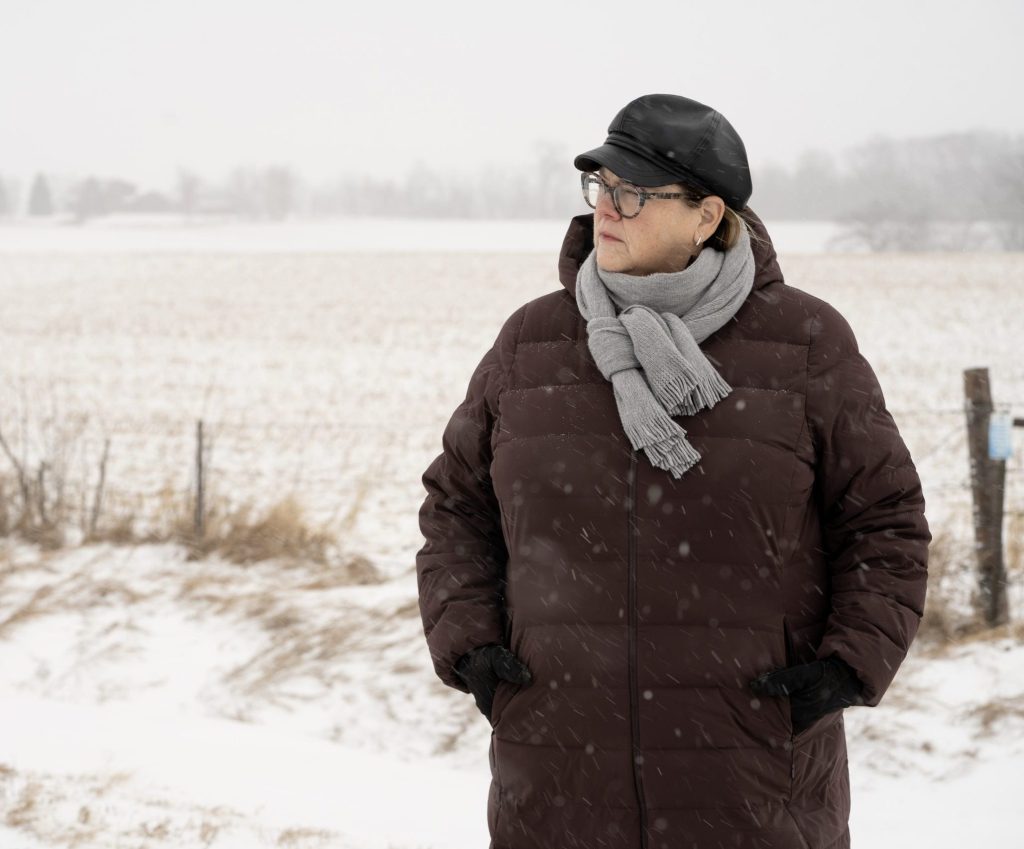
The program also featured voices of two cancer survivors Felder interviewed for the investigation.

3 charts to better understand the potential link between pesticides and cancer
He said people with different views on farming practices, regulation, and government oversight repeatedly told him the same thing in his 100 interviews for this piece: the pattern is difficult to ignore, and the lack of clear answers has left families and communities searching for accountability.
“I think it’s really fascinating looking at this issue because it does cross the partisan scale, including in Iowa,” Felder said. “(I heard) many people, conservative and liberal … coming together and saying, ‘Listen, it’s hard to deny that something is going on. And it’s time that we maybe look at steps to protect our loved ones and neighbors.’”
Listen to the full interview on Iowa Public Radio here.
read more


