
The latest Cyclospora outbreak is a reminder that the biggest food safety stories begin long before anyone gets sick. That's why we've spent years examining the policies, oversight and corporate influence shaping America's food supply.
Help us keep asking the bigger questions by making a gift before July 31.
Local impact. National reach.
The latest Cyclospora outbreak is a reminder that the biggest food safety stories begin long before anyone gets sick. That's why we've spent years examining the policies, oversight and corporate influence shaping America's food supply.
Help us keep asking the bigger questions by making a gift before July 31.
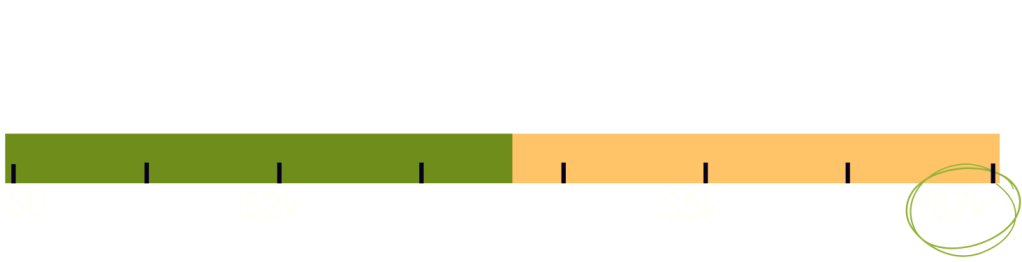
America’s most farming-dependent counties overwhelmingly backed President-elect Donald Trump in this year’s election by an average of 77.7%.
Trump has appeared on three presidential ballots, beginning in 2016. In 2020 and 2024, he increased his support nationwide, topping 50% in this year’s popular vote.
However, Trump also increased his support this year among farming-dependent counties by nearly two percentage points compared to 2020.
Farming-dependent counties are defined by the USDA as counties where 25% or more of average annual earnings were derived from farming, or 16% or more of jobs were in farming.
There are 444 counties labeled as farming-dependent, although hundreds more have strong agricultural economic ties. Other county categories include mining, manufacturing, federal/state government, recreation and nonspecialized, which includes counties that aren’t considered dependent on any of the above categories.
Most farming-dependent counties are in the central United States. Trump won the majority of votes in all but 11 of these counties.
Some political observers questioned whether Trump’s support would wane among farmers after his first-term trade war, which led to increased prices and a drop in agricultural exports. During the campaign, Trump promised a return to high tariffs if given a second term.
“His policies didn’t do us any good; his tariffs didn’t do us any good,” Lance Lillibridge, an Iowa farmer, told Investigate Midwest.
Not only did Trump increase his support among farming-dependent counties, but more than 100 of those counties supported him with at least 80% of their vote.
More than 1,500 data centers are planned nationwide, many in rural communities. Here’s what to know about their water use, environmental impact and the growing opposition.
The 2022 Census of Agriculture offers a snapshot of producers with 10 years or less of farming experience and shows how they differ from US farmers overall.
State records list roughly 11,000 regulated animal feeding operations. A yearlong effort using federal aerial imagery, satellite analysis and state records found more than 15,000 livestock facilities, revealing a larger industrial footprint and raising new questions about how Iowa tracks manure, pollution and oversight.
While a new state law partly limits data center groundwater use, in reality, data centers avoid water permits entirely by buying water from utilities. Residents are demanding answers in communities like Luther and Yukon.
While the numbers are small compared to the overall arrests, data obtained by the Deportation Data Project show farm counties saw an increase in ICE arrests last year as the Trump administration pursued mass deportations of immigrants.
Newly released records from early in Trump’s tenure show that, even after a department-wide search, the US Department of Agriculture found only a handful of grants that fit its own definition of ‘gender ideology.’ The USDA canceled more anyway.
New survey results show rural residents are more worried than urban and suburban Americans about the impacts of data centers, especially when it comes to electricity costs and the changing use of farmland, as AI infrastructure expands.
Former Investigate Midwest reporting intern Melissa Dai reflects on the reporting behind her nationally recognized investigation and why reader support helps make work like this possible.
The closure of Tyson Foods’ Nebraska beef plant exposed vulnerabilities in an industry dominated by four companies. Analysts say more closures could follow if supplies remain tight.
The second Trump administration has paid more attention to antitrust concerns in the agriculture industry, but the episode shows that, in at least some respects, they are trying to ‘reinvent the wheel,’ experts said.
Caspar Dowdy, a University of Missouri student, and Paloma Sanchez-McGee, a recent University of Nebraska-Lincoln graduate, have joined Investigate Midwest as summer interns.
After years of lawsuits against agrichemical companies and battles over environmental regulations, the nation’s highest court is expected to rule this summer on a case that could significantly alter the pesticide industry.
Critics say the structure of the deal provides a rich payout of $675 million in fees to the lawyers helping promote the deal, but paltry payments for the cancer sufferers who make up the class.
The agreement relates to Bayer’s use of loyalty programs to sell its seeds. Federal authorities have said loyalty programs in the seed industry have raised prices for farmers.
Drey’s diagnosis comes amid national attention on Iowa’s cancer crisis, which experts believe could be tied to a “toxic mix” of environmental and health risk factors.
Like this:
LikeLoading…
Type of work:
Explainer A data-driven story that provides background, definition and detail on a specific topic.
Republish our articles for free, online or in print.
Unless otherwise noted, you are allowed to republish our stories, original photos and graphics for free under the following conditions:
You must include a credited byline as published , for example “Author Name, Investigate Midwest.” If your system does not allow it, you instead must include this tag at the top of the story:“This story was originally published on Investigate Midwest”
You must include this tagline and linkback Investigate Midwest is an independent, nonprofit newsroom. Our mission is to serve the public interest by exposing dangerous and costly practices of influential agricultural corporations and institutions through in-depth and data-driven investigative journalism. Visit us online at www.investigatemidwest.org
Please note: Some of our work is funded through grants and fellowships and may be embargoed for republication until a set date. In these instances, we will have a special tagline and byline on our original published piece. If you republish this work, you must include these credits as published. Any work embargoed for republication will be denoted.
Original photos and graphics may be republished with a credited cutline.
It’s okay to put our stories on pages with ads, but not ads specifically sold against our stories. You can’t state or imply that donations to your organization support Investigate Midwest’s work.
You can’t sell our material separately or syndicate it.
You can’t republish our material wholesale, or automatically; you need to select stories to be republished individually.
You can’t use our work to populate a web site designed to improve rankings on search engines, or solely to gain revenue from network-based advertisements.
You cannot use our work in digital and print publications such as books, ebooks,special editions, data applications and similar material without separate permission.
You may not edit the story content for length, tone or meaning without prior approval. Minor changes for time, location, or editorial style are acceptable.
Questions? Please contact executive director Erin Orr at erin.orr@investigatemidwest.org or audience engagement manager Lauren Cross at lauren.cross@investigatemidwest.org.
GRAPHIC: Trump support grew in America’s top farming counties despite first-term trade war
by Ben Felder, Investigate Midwest, Investigate Midwest November 13, 2024
Ben Felder is Investigate Midwest’s first editor in chief. He was hired in 2023 to cover agribusiness and the meat industry in Oklahoma.
Felder previously worked for The Oklahoman as a political enterprise...
More by Ben Felder, Investigate Midwest
139 replies on “GRAPHIC: Trump support grew in America’s top farming counties despite first-term trade war”
Comments are closed.