This collaborative report was originally published by KOSU, a public radio service in Oklahoma, and The Frontier, a nonprofit newsroom in Oklahoma.
Row by row, Oklahoma Bureau of Narcotics and Dangerous Drugs agents and Garvin County deputies cut down 2,500 marijuana plants and loaded them in a dump truck for destruction during an April 2021 raid near Pauls Valley.
The grow operation had a Oklahoma Medical Marijuana Authority license, but had not obtained an additional permit from the OBNDD, according to authorities. Both are required to legally grow marijuana in the state.
The grow’s two owners, a man who recently moved from Colorado named Dao Feng, and Tulsa resident Kathleen Windler, were later arrested.
The April 30 raid and arrests triggered a chain of events that led to millions of dollars in seized funds and hundreds of other medical marijuana farms and dispensaries losing their licenses. After the bust, Windler, a 68-year old paralegal who was listed as the majority in-state owner for hundreds of medical marijuana businesses in the state, voluntarily surrendered 300 licenses.
The Windler case marked a red flag for authorities and regulators, prompting state regulators to take a closer look at marijuana businesses with only tenuous links to the in-state residents they listed as majority owners.
Oklahoma has attracted 8,306 licensed commerical marijuana operations since 2019, outnumbering more populous states like California and Colorado. Observers have referred to Oklahoma as "the only free-market marijuana industry in the country," with 10 percent of the population carrying medical marijuana cards.
Listen to this story here.
Regulators estimate that medical marijuana is already a billion-dollar industry in the state, second only to oil and natural gas.
The size and growth of the industry have outpaced regulators’ ability to keep up with enforcement. OMMA is required to physically inspect all licensed marijuana businesses in the state, but has visited less than half since the inception of the program, according to the agency.
At least 75% of an Oklahoma marijuana business must be owned by someone who has lived in the state for at least two years, but businesses are finding creative ways to get around the requirement.
The state laws governing medical marijuana grow operations have led to hundreds of cases of ghost owners — in-state residents who are owners of companies on paper only. The practice has opened the door to out-of-state and foreign-backed companies and individuals to control large portions of the state’s marijuana market.
“It just took time for word to get out that Oklahoma is a state with pretty light regulations, has been from the start, pretty low tax burden, comparatively pretty low cost of living, very low barriers to entry and low licensing fees and all that,” said Barrett Brown, deputy director and policy liaison for OMMA.
The situation has hurt legitimate marijuana grow operations, brought in possible elements of organized crime and raised questions of ethical labor practices at some operations. The influx of new medical marijuana businesses has also strained the infrastructure of some rural communities.
State regulations require the OMMA to make a determination to accept or reject a license application within 90 days, but the authority does not have the staff or capacity to physically inspect the business within that 90-day window.
“Currently, you just come to OMMA and submit the required documentation for the statute,” Brown said. “And as long as everything checks out, you're good to go with no one having inspected the business.”
Since Oklahoma voters legalized medical marijuana in 2018, state agencies have collected more than $332 million in sales and excise tax. In 2021 alone, medical marijuana generated nearly $150 million in new sales and excise tax revenue. Most of those funds do not go toward enforcement. State law requires that 75% of any taxes collected above OMMA’s budgeted amount go toward education.
The state has 50 inspectors but would need about 100 more to get through the backlog of inspections, Brown said. The goal, he said, is to have all businesses inspected by the end of 2022.
Brown also said he’s talking with the Legislature to strengthen the required documentation for commercial licenses to help OMMA root out fraudulent applications.
“Pre-licensure inspections, I think that would also help tremendously,” Brown said. “If we're nothing more than to give us more time to conduct any sort of investigations.”
Despite being short-handed, state regulators and law enforcement say they have made some headway in the past year against fraudulent and illegal grow operations, but there is still a long way to go. And lawmakers expect to see dozens of bills filed for the upcoming legislative session to tighten medical marijuana regulations.
Ghost owners
Before her arrest, Windler worked as a paralegal for the Tulsa-based Jones Brown law firm, which has helped hundreds of clients establish medical marijuana businesses in Oklahoma, according to state records.
Many of those businesses were actually owned by people from out of state or from outside the country.
Beginning in 2019, the Jones Brown firm directed medical marijuana businesses to sign a consulting agreement with Windler, who would step in as an in-state owner of the companies, Windler claims in a lawsuit she later filed against the Jones Brown law firm. According to the suit, authorities began investigating Windler and the Jones Brown law firm in late 2020.
The agreements between Windler and the out-of-state owners were straightforward — Windler would be listed as the majority owner on paperwork submitted to state regulators, but she was not entitled to a share of the profits, could not make business decisions or claim ownership of any company property. In exchange, each company would pay Windler $3,000 a year, for the duration of the contract.
Windler was eventually listed as the majority owner for 300 medical marijuana businesses in Oklahoma.
State officials told The Frontier and KOSU that the practice of signing on ghost owners to meet the in-state residency requirement is common.
“They're definitely not the first law firm that has done something like this. I know that there have been investigations of other law firms for offering that type of advice,” said Oklahoma City attorney Andrew Casey, who is representing Windler in her civil suit against Jones Brown.
Casey said that Windler trusted her former bosses at the Jones Brown law firm when they told her it was legal to sign the ghost owner agreements. But that advice would ultimately get her arrested, he said.
In late August, Windler hired Casey as her attorney and sued the Jones Brown firm, along with its founders Logan Jones and Eric Brown, and other associated groups. The lawsuit claims Jones and Brown duped Windler into signing the ghost owner agreements.
David Cheek, an attorney for Jones Brown, argued at a court hearing in December that Windler was an active participant in the ghost owner scheme. Jones and Brown both declined interview requests by The Frontier and KOSU.
“She knew what was going on. She knew exactly what was going on,” Cheek told the court. “She was an active participant every step of the way, and paid well for it.”
Cheek argued state statutes are vague on what constitutes ownership of a medical marijuana business, and that Jones and Brown acted within the bounds of the law.
“You can criticize us from time to time for being too creative, but with all due respect. We're entitled to read the words the Legislature passed and be creative,” Cheek said.
Windler’s abrupt surrender of hundreds of hundreds of business licenses where she was listed as an owner last year set off a shockwave in the state’s medical marijuana industry. Dozens of medical marijuana businesses filed lawsuits against the OMMA seeking to have their licenses reinstated. The cases are still pending, but judges have issued temporary injunctions allowing the businesses to continue operating.
After the Pauls Valley raid, Windler and Feng were charged with cultivation of marijuana, possession of a controlled dangerous substance without a tax stamp and violation of the U.S. Uniform Controlled Dangerous Substances Act — all felonies.
In November, prosecutors dropped the charges against Windler, but criminal cases against Feng and three Chinese nationals arrested during the Pauls Valley raid are still moving forward.
Shortly after the raid, OBNDD seized nearly $3.2 million from Feng’s bank account, alleging the money was to be used to violate federal law that bans marijuana cultivation. A judge has yet to enter a decision in those cases, and Feng is mounting a defense to reclaim the money, according to court records.
Feng’s attorney, Marco Palumbo, said his client had the proper license at the time of the raid, though he did not provide a copy of that license to KOSU and The Frontier. Mark Woodward, a spokesman for OBNDD, said the license was never issued to the business.
Legal disputes
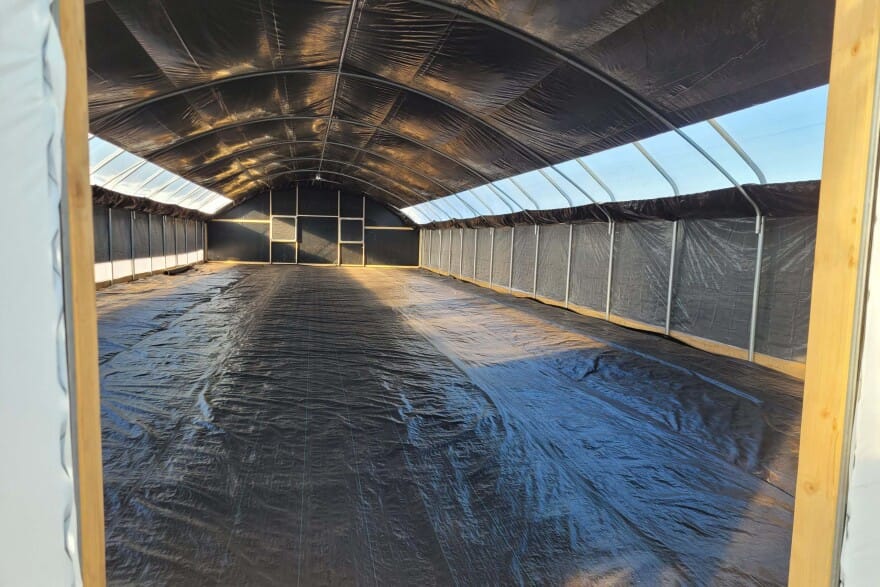
Lue and Julie Her moved from California last year to start their own medical marijuana grow operation in Okfuskee County. Drawn by the relatively cheap price of land, the low-cost barriers to entry into the Oklahoma market, and assurances from the Jones Brown law firm that the in-state resident majority owner requirement wouldn’t be a problem, Lue said he and his wife decided to try to stake their claim in the state’s booming marijuana industry.
They spent more than $50,000 to set up three greenhouses and a plant nursery, and to pay for labor and legal fees.
Because the Hers had lived in Oklahoma for less than two years, they didn't yet meet the state’s residency requirements to get a license to grow medical marijuana. The Hers said they trusted the Jones Brown law firm’s assurances that state residency requirements wouldn’t be an issue to start growing within weeks.
They worked with Windler to get their license last May and paid the law firm around $15,000. Soon after getting their OMMA license, but before getting their OBNDD license, the Hers said Windler forfeited their license.
“My license is about to expire, and we're going to start the whole process (again), and that’s a whole bunch of money wasted,” Lue Her said.
So they went to their second plan: They found another Oklahoma resident and submitted their application again. They’ve since been calling every day for the past few months, but say the license is still under review.
“We spent a lot of money on this property here and we can’t do anything,” Lue Her said. “We are just sitting here.”
The Hers are now part of a lawsuit against the OMMA along with nearly two dozen other marijuana businesses that claim Windler had no right to surrender their licenses.
Rapid industry growth has led to problems
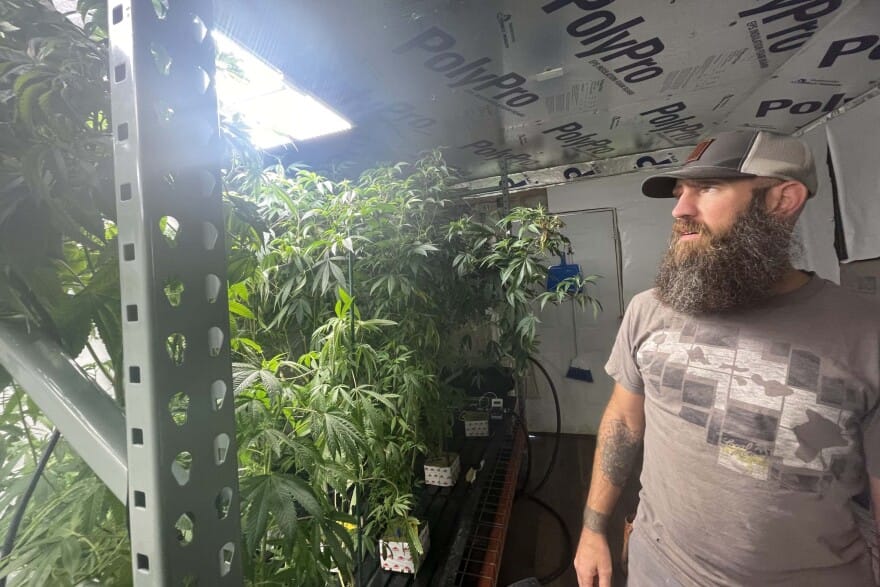
Rapid growth of the state’s medical marijuana industry has led to issues ranging from strain on utilities to alleged involvement in organized crime.
A rural couple living in Sapulpa has filed a lawsuit against 21 marijuana businesses, claiming illegal growers built less than 50 feet from their property line. Residents Keith and Stephanie Grant say they can’t enjoy their home due to what they describe as a “pungent smell” or the sound of helicopters the growers operate that circle their home.
Some rural electric and water utilities managers are struggling with the influx of growing operations. One rural water district in Garvin County told KOSU and The Frontier that a single large marijuana grow in the district used more water in one month than the rest of its customers combined.
Farmers are worried about lawsuits if pesticides they spray end up inside a nearby marijuana grow. OMMA director Adria Berry said the agency is creating working groups to resolve the issues between industries.
Oklahoma Bureau of Narcotics spokesman Mark Woodward said the agency is aware of multiple brokers, agents and law firms tied to fraudulent licenses that specialize in qualifying out-of-state owners to grow marijuana in Oklahoma.
Cheap land and low licensing costs have lured marijuana growers to Oklahoma, he said.
“That's why a lot of these groups are hiring ghost owners,” Woodward said. “And basically, their only knowledge of the farm is that they go to the mailbox once a month and get a check to claim on the paper that they're the owner.”
Woodward says lax regulations have lured out-of-state and international investment that could be fronts for organized crime.
Migrant workers brought in to harvest and cultivate the plants have few legal protections since marijuana remains illegal at the federal level. There are federal and state programs to help agricultural employers find workers and protect migrant workers’ rights. The programs don’t protect migrant workers at medical marijuana operations because they are federally funded, said Shelley Zumwalt, executive director of the Oklahoma Employment Security Commission.
Complaints in rural areas, legislation on the way
Lawmakers are taking notice of the problem. Oklahoma enacted laws in 2021 to give $5 million in OMMA licensing fees to OBNDD to investigate fraudulent marijuana operations and provide funding to the Oklahoma Attorney General’s office to investigate and collect data on foreign land ownership in the state. Sen. Jim Inhofe’s office has also requested $4 million from Congress to fund OBNDD’s marijuana enforcement team.
Oklahoma legislators plan to introduce a new wave of bills to further regulate the industry in the coming legislative session. Tightening ownership requirements is at the top of the list.
Rep. Scott Fetgatter, R-Okmulgee, said the state’s residency rule spelled trouble from the beginning.
“What that essentially did was … set up an environment for straw man business structures, and those have been deemed illegal,” Fetgatter said.
Another proposed bill would let local governments cap the number of licenses in their areas.
An unhealthy industry
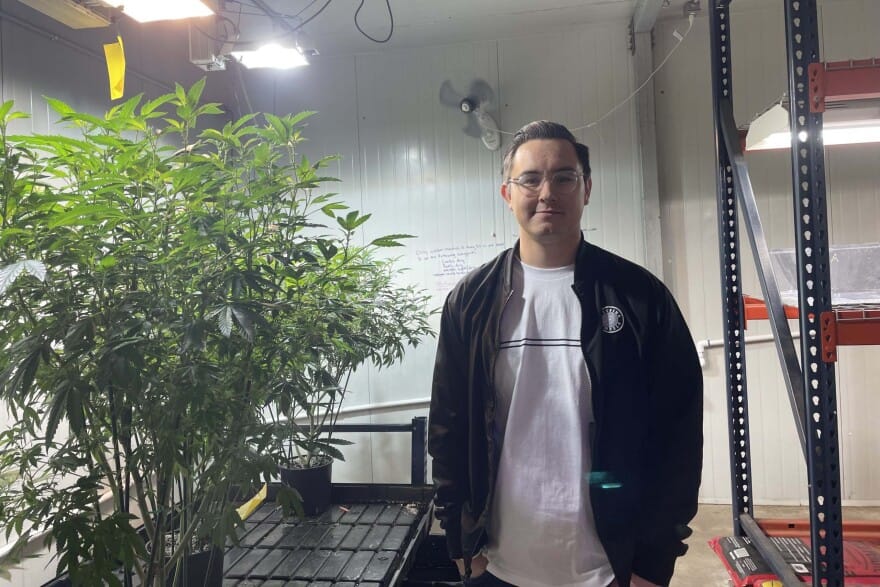
Growers like Sean Sherwood, a co-owner of Lucid Moon in Guthrie moved to Oklahoma in 2019 from Arizona to get into the business. Unlike Arizona, which caps the number of licenses it issues, it wasn’t hard to get started in the marijuana business in Oklahoma.
“It was much easier to stand out as a reputable, solid business person, you know, doing all the right things, just because it's easy to cut through the noise of people that were maybe novices or just getting into the industry,” Sherwood said. “And overall, it was just a healthier market for the business end. It was not as cutthroat and not as competitive as it has gotten recently."
Now, Sherwood describes the market as unhealthy. Oversaturation of the market has caused prices to tank, and they bought their location in a big industrial complex from someone who went out of business, he said.
“The way I've described it is treacherous,” Sherwood said. “It's very, very competitive. If you don't know what you're doing, you'll get chewed up and spit right back out.”
There’s hope that things could get better, Sherwood said. He said a moratorium on licenses, tightening up regulations and allowing recreational use could help the market.
As marijuana growers prepare for survival, OMMA officials like Brown said Oklahoma is on its own path for solving the industry’s challenges.
“I really think we're on our own path,” Brown said. “I don't know where we're going to be in five years. But I can tell you that our goal is for the medical marijuana industry to be treated like any other industry.”
Top photo: The temporarily shuttered grow facility owned by Dao Feng, just east of Pauls Valley, where Garvin County deputies and Oklahoma Bureau of Narcotics agents performed a raid on April 30, 2021. Photo by Clifton Adcock, The Frontier