When the Covid-19 pandemic hit, Bill Brown, an Ohio farmer, had to adjust quickly.
He typically sold his poultry at farmer’s markets, but they closed down because of the virus. He swiftly changed his business model to selling online.
It’s been so successful he plans to continue using the website even when normalcy returns.
“We actually kind of prefer it that way,” Brown said. “We can put all of our inventory up, and then the customers can go in. They don’t have to worry about waiting in line or getting to the market.”
While farms that rely on other businesses to ferry their products to consumers have struggled, farms that sell directly to consumers have not, farmers and experts said.
The virus has upended supply chains: An Ohio Farm Bureau survey in April showed that about 45 percent of respondents experienced disruptions distributing their products. Dairy farmers dumped milk, and hog farmers euthanized piglets. But sellers in more local markets have, for the most part, been insulated, they said.
“That is the gift of the local system, that it’s so much more resilient than the big industrial system,” said Margot McMillen, a small-scale organic vegetable and beef farmer in Missouri.

She said her farm has lost money because she can no longer give tours, but otherwise she’s thrived because she sells locally at a small farmer’s market.
Many farmers are starting to switch from wholesale markets, where they sell through other businesses, to retail markets, where they sell directly to consumers, said Raghela Scavuzzo, the associate director of food systems development at Illinois Farm Bureau.
She’s also seen an increase in farms starting online stores and community supported agriculture, where consumers can become members of a farm, similar to becoming members of a grocery store, she said. There are also more partnerships between farms through vendor boxes, which combines products from several different farms into one package.
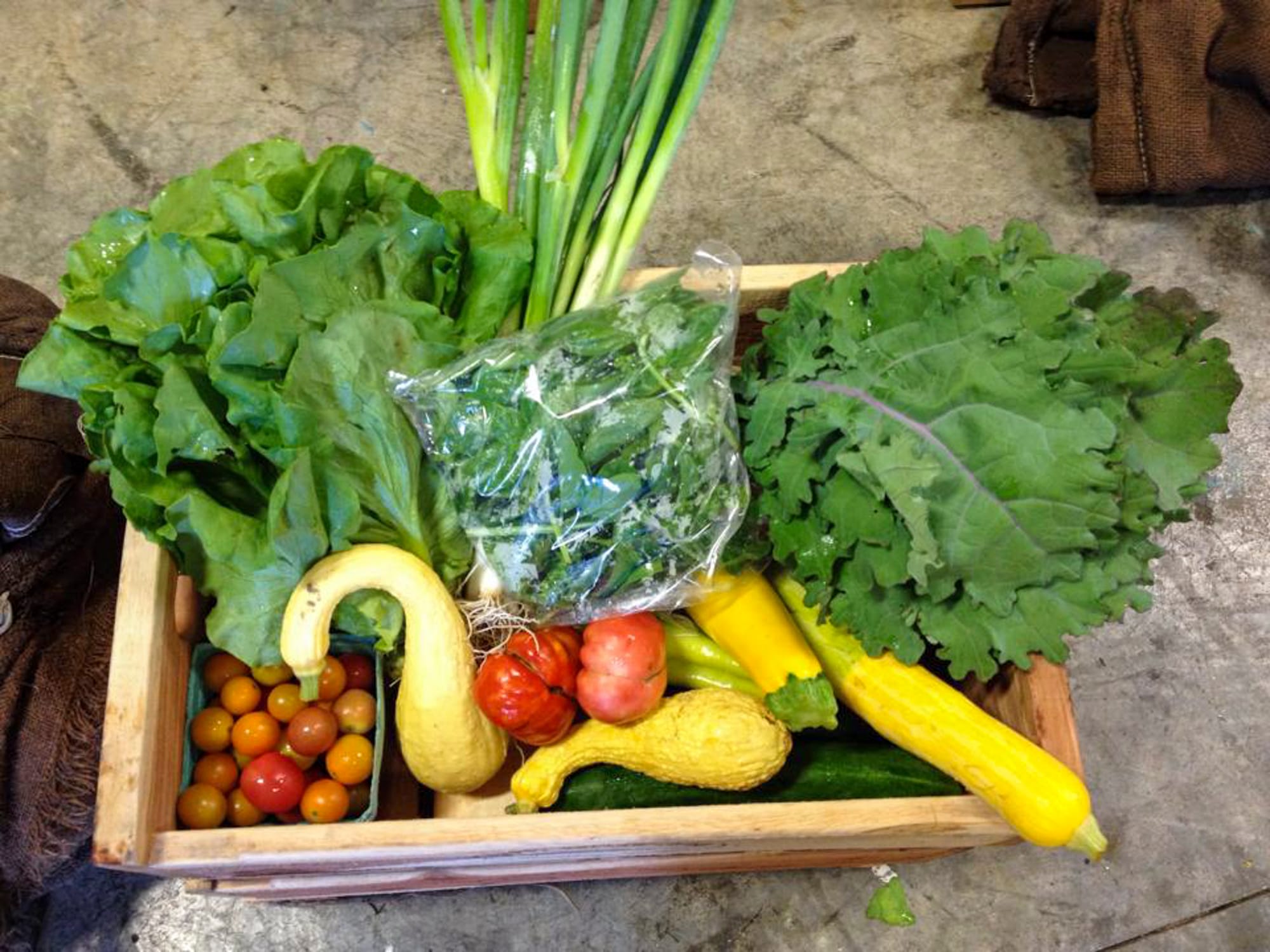
“For $25, you get a package of bratwurst, you get the produce from another farm, you get a dessert from a small bakery and maybe you get salsa or jam from a different vendor,” Scavuzzo said.
Because of supply chain issues, restaurants being closed and nervousness about shopping at grocery stores, Brown said his sales have increased. In April and May, he saw a 300 percent sales increase over those months compared to previous years, he said. (His sales have since slowed down because more places have reopened, he said.)
Others have not fared as well.
Krista Swanson, a corn and soybean farmer in Illinois, said her family farm is the beginning of the supply chain for many people. About 30-40 percent of their corn feeds animals, and another 30-40 percent helps produce ethanol, which is used in gasoline. Then about 20 percent of their corn is exported.
Her farm felt the repercussions of restaurants and schools closing, as well as less gas being consumed as people remained home, she said.
Her farm, like many, is also still feeling the repercussions of the trade war with China. Before the trade war, she said about two-thirds of their soybeans would be exported to China.
Because there’s only one planting season in the spring, they couldn’t modify anything immediately, she said.
“We only plant and sow once a year, so we can’t make substantial changes in our level of production just to react to the market right away,” Swanson said.
Some farms have resorted to rationing how much their animals eat so they don’t gain as much weight, said Todd Hays, a hog farmer and the Missouri Farm Bureau's vice president. He said that pigs and cattle have to be in a certain weight range when they’re sent for slaughter. Otherwise, they’re sold for a discounted price and the farmer receives less money, he said.
Some farmers were also able to sell their animals directly to local consumers, who then had to pay for the butchering themselves, Hays said.
On the other hand, Liz Graznak of Happy Hollow Farm in Missouri said that she’s seen a huge demand for her organic vegetables. Because she participates in community supported agriculture, she sends members of her farm vegetables in a box once a week for either 24 weeks or 32 weeks.
So many have asked to join her CSA that she’s had to turn some people away, she said.
“I had to tell many people, ‘No, I’m sorry, we’re full,’ because I didn’t want to promise people more than what I could grow,” she said.
Like Brown, Graznak said she scrambled to create an online store.
“I saw this really huge increase in demand in people wanting to order my stuff and wanting me to deliver it to them,” she said.
Graznak also sells to several restaurants and Clover’s Natural Market, a health food store in Columbia, Missouri. When the pandemic started, Clover’s physical store shuttered and buyers had to use curbside pickup. Sales really struggled, said Tyler Kruger, the produce manager.
“(The farmers) didn’t have any issue getting products to me,” he said. “I just had a really hard time when we were closed to the public selling it.”
The store reopened to the public at the end of May, and sales have improved, Kruger said.
When it comes to wholesale and retail farms, Hays, of the Missouri Farm Bureau, said it’s important to have a balance between the two. Otherwise, there would be an oversupply, he said.
But Scavuzzo, of the Illinois Farm Bureau, said she thinks vendor boxes and online shops are here to stay; many farms were already heading in that direction.
She believes that system eases shopping for consumers and allows them to order their food from just one place and receive diverse products.
“What we’re seeing is collaboration,” she said, “and we’re seeing modification in how we deliver it.”