The farmworkers scattered.
There was a union representative in the workers’ employer-provided housing, on an orchard in upstate New York. Their employer, major apple grower Porpiglia Farms, had hired them on H-2A, or temporary labor, visas. That day in August 2023, according to the workers’ union, United Farm Workers, the orchard’s owners burst in. The farmworkers ran or hid in their rooms.
Following the incident, the UFW filed a complaint with New York state, alleging the orchard prevented workers from exercising their rights. Porpiglia Farms disputed the UFW’s account and said it is working with the UFW. However, on that day, the UFW organizer had “trespassed” in an effort to “gin up a controversy,” Anthony Porpiglia, the owner, said in a statement provided to Investigate Midwest by his attorneys. The workers “asked her to leave and she refused,” he said.
The following summer, workers arrived for harvest season. Near the orchard’s entrance, workers, whose union has endorsed Kamala Harris for president, noticed a new sign: “Farmers for Trump.”
The scuffle in the orchard epitomizes the division on immigration between the two presidential candidates and what could be at stake for immigrant workers, who have underpinned the agriculture industry for decades. While Donald Trump’s rhetoric targets its workforce, the industry, writ large, has favored the former president. President Joe Biden's administration, with Kamala Harris as vice president, has instituted protections paving a path to more farmworker unionization, while also cracking down on border crossings.
A Harris victory would likely mean a continuation of Biden’s efforts — and renewed hope for a path to citizenship for undocumented farmworkers. She’s publicly supported one for years. But farmworkers, who are essential to the U.S. economy, will still fear being uprooted regardless of who is president, said Laurie Beyranevand, director of the Center for Agriculture and Food Systems at Vermont Law and Graduate School.
“At the end of the day, many farmworkers still fear deportation,” she said. “Obviously, that fear, I think, is more pronounced with a policy agenda like the Trump administration, but it's not as though it's not present with the Biden administration either.”
Neither campaign responded to a request for comment on their immigration stances.
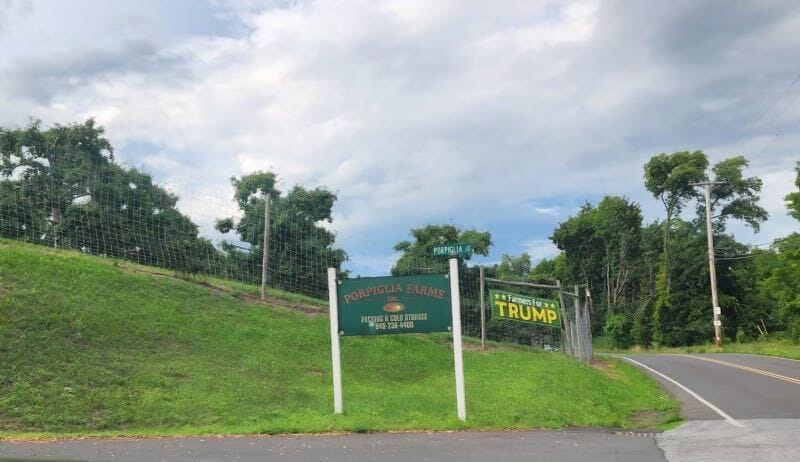
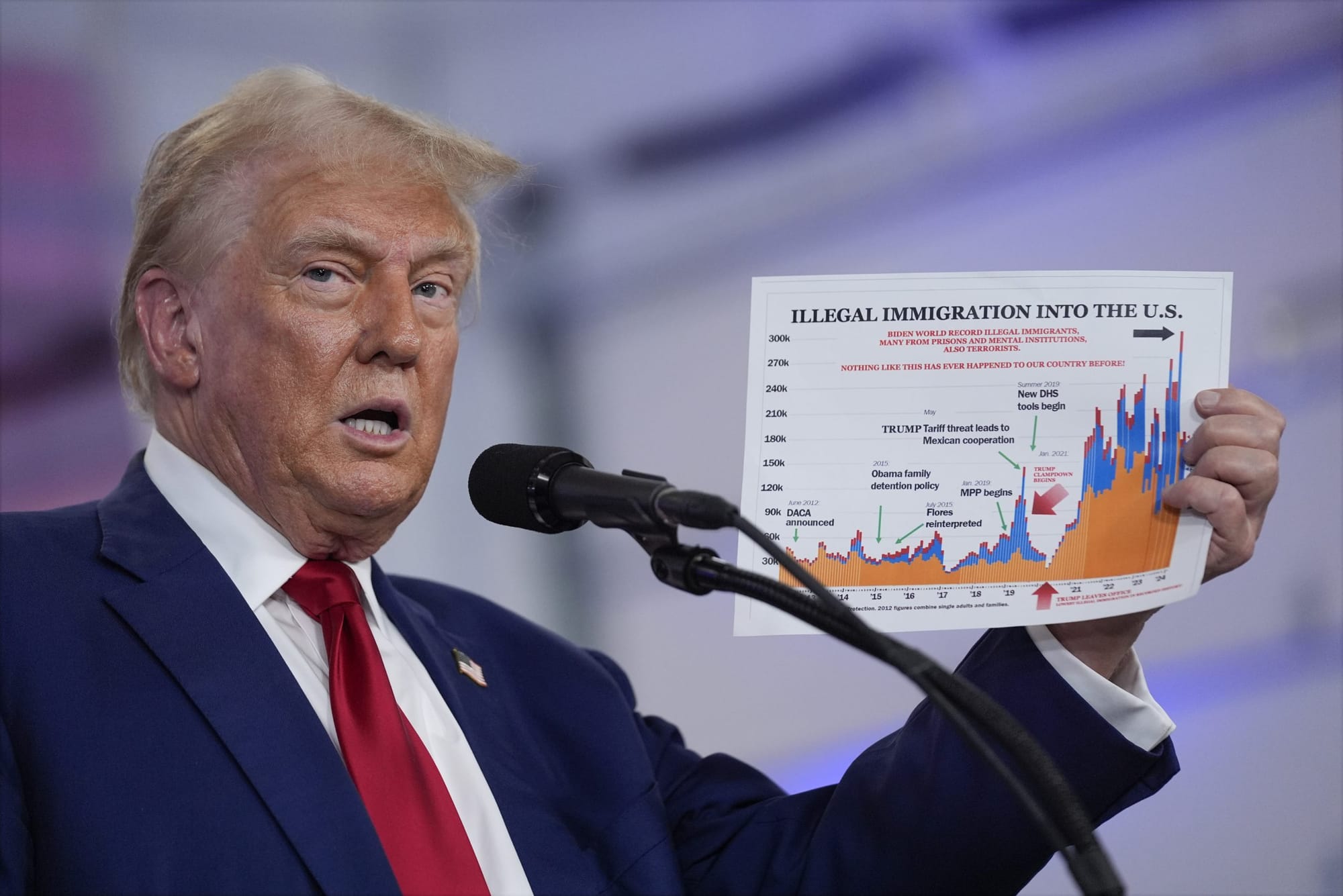
If re-elected, Trump has promised to deport upwards of 20 million undocumented people, many of them agricultural workers who perform the dangerous jobs most Americans don’t want. Trump supported the use of the H-2A program, which farmers said is necessary to fill labor shortages. But the former president’s close allies have recently proposed eliminating it.
Agriculture corporations have lavished Trump and Republicans with campaign cash. The disparity in spending on conservatives and liberals, in conservatives’ favor, increased during the Trump administration. Rural areas, a proxy for farmers, largely voted for Trump in 2016 and 2020.
In an interview with The New York Times, Stephen Miller, who led Trump’s immigration efforts during his administration, said the Trump campaign’s goal was to upend industries that rely on immigrant labor.
“Mass deportation will be a labor-market disruption celebrated by American workers, who will now be offered higher wages with better benefits to fill these jobs,” he said.
Some research suggests deportations, especially at a large scale, could backfire on U.S. workers. In 2023, University of Colorado researchers estimated that, for every 1 million unauthorized workers deported, 88,000 native workers would lose jobs. When companies lose their labor forces, the researchers concluded, they find ways to use less labor, not replace their lost workers.
A historical example is the end of the Bracero Program, which allowed Mexican workers into the U.S. for seasonal jobs. Instead of hiring more U.S. workers when their labor force was suddenly gone, farmers turned to heavy machinery, according to 2017 research. There was no corresponding increase in employment or wages for native workers.
Temporary labor visa programs have exploded in popularity. In 2023, the government granted about 400,000 H-2A visas. But America’s farms still depend on an undocumented workforce. Out of about 2 million farmworkers in the U.S., government surveys show about 44% are undocumented. (Hundreds of thousands of other workers in the food supply chain — meatpacking plants, grocery stores, restaurants — are also undocumented.)
“If we lost half of the farmworker population in a short period of time, the agriculture sector would likely collapse,” said Mary Jo Dudley, the director of the Cornell Farmworker Program. “There are no available skilled workers to replace the current workforce should this policy be put into place.”
Antonio De Loera-Brust, a UFW spokesman, said deporting millions would be nearly impossible logistically. The point of Trump’s rhetoric, he said, was to instill fear in farmworkers so they don’t demand their rights.
Farmers who support Trump are “voting basically to try to deny their workforce labor rights and to try to reduce their workforce’s wages,” De Loera-Brust said. “I don't think you need to psychoanalyze it that much further beyond, ‘This is in their economic interest.’”
Investigate Midwest requested interviews with several industry groups to discuss the candidates' stances on immigration and the potential impact on agriculture. The Meat Institute, which represents the meatpacking industry, said the immigration policy it supported was expanding the visa labor program to include its industry.
“Continued labor problems in the processing sector will hamper production and drive-up costs, hurting both upstream producers and downstream consumers,” Sarah Little, the group’s spokesperson, said in an email. “Efforts to address the labor needs of agriculture must consider both the production sector and the processing sector.”
However, most either didn’t respond or declined to comment. For example, the American Farm Bureau Federation, which positions itself as the voice of agriculture, said it does “not endorse candidates nor engage in election politics.”
However, through political action committees, the bureau’s state affiliates endorse candidates. The federation’s current administrative head, Joby Young, was a high-ranking official in Trump’s U.S. Department of Agriculture.
Farm labor is dangerous. In fields, workers risk pesticide exposure, which can cause skin rashes. Long-term exposure can cause cancer or contribute to developmental issues in offspring. Tractors have crushed limbs. Workers have died falling into grain bins.
The pay is also unappealing. Agriculture is exempt from federal overtime laws. Sometimes, workers are paid “piece rate,” meaning their earnings depend on how much they harvest in a day.
In meatpacking plants, workers perform the same motion, over and over, with sharp knives. Workers have suffered tendinitis, lacerations and amputations. Because it’s so difficult, plants sometimes gradually increase newbies’ hours: It’s called “break-in pain.” And, as the COVID-19 pandemic struck, plant workers were forced to return to their jobs, exposing themselves and their families to the virus.
Many U.S. citizens do not want jobs like this, Dudley said. Sometimes, farmers feel they have no choice but to overlook suspect IDs.
“These are valued employees,” an anonymous farmer told Minnesota Public Radio in 2019 after he suspected U.S. Immigration and Customs Enforcement agents were surveilling his employees. “We get their IDs and everything. Do we know if they’re legal or illegal? Well, we’re going to say we’re open on that. We don’t know that they are, we don’t know that they aren’t. But they are employees and they are the most hard-working people that you can find.”
One of those workers, for decades, was Gloria Solis. In 1998, she left Mexico, where she struggled to afford food and rent, and began picking cherries in Washington state. When Trump was in office, she tried to stay home as much as possible, fearing an interaction with authorities that might lead to deportation. She mostly risked it for her job and for medical appointments for her two sons, who are U.S. citizens, she said in Spanish through an interpreter. Each time, she prayed.
Some of her employers seemed emboldened by Trump, and the employers made it clear that, if she and her coworkers didn’t work hard enough, they could be easily replaced. When Biden was elected, she said, there was a noticeable change. Workers with legal status and workers who were undocumented were treated much more fairly, Solis, now 47, said.
“We know that (Biden) is no longer in it, but there is his partner,” she said. “Hopefully nothing will change (as far as administration policy) because it’s perfectly fine. We are afraid that Trump will be elected. If he gets elected, then we won’t know what to do.”
Trump raids included ag job sites; Biden secured worker protections
Throughout Trump’s administration, immigration authorities raided farms and food processing plants. When Biden was elected, he reversed Trump’s directives. Instead of targeting workers, Biden focused on exploitative employers.
Under Trump, some of the most prominent agriculture companies in the U.S. dealt with immigration raids. In 2018, Christensen Farms — which owns two of the largest pork processing plants in the U.S., Seaboard Foods in Oklahoma and Triumph Foods in Missouri — was caught up in U.S. Immigration and Customs Enforcement action. In 2019, raids in Mississippi rounded up about 700 undocumented workers. Some worked for Koch Foods, which supplies much of the poultry at Wal-Mart.

While the raids barely made a dent in the agricultural workforce, they had an effect. Many farmworkers feared speaking up about workplace abuses, said Nezahualcoyotl Xiuhtecutli, a National Sustainable Agriculture Coalition advocacy coordinator who previously worked as a Florida farmworker advocate.
“They felt like they couldn't raise their voices about concerns they had on safety or wage theft or any kind of labor violation,” he said. “They just felt like it made them a target and they could easily be replaced.”
Many farmworkers who have been in the U.S. for decades travel north from Texas and Florida each year to work in Midwestern fields. But, with Trump in office, some in Florida decided to forgo the annual pilgrimage to avoid running into ICE, Xiuhtecutli said. Some took housekeeping or landscaping jobs to make ends meet.
“I don't think it was necessarily a positive change for them because it wasn't steady work,” he said. “It was still seasonal.”
Once in office, Biden announced crackdowns on employers in the food supply chain that used migrant child labor, following a New York Times expose. Children worked in factories that processed or produced products for Walmart, Whole Foods and General Mills, the cereal giant.
In 2023, Biden also announced that workers who were in the country without documentation could be granted deferred action — i.e., not immediate deportation — if they witnessed or were victims of labor violations. The change would help hold “predatory” employers accountable, the administration said.
UFW’s De Loera-Brust said the deferred action rule was a “game changer” for unions. A couple dozen members of his union, which represents workers with a variety of legal statuses, have been granted stays under the new rule, he said.
“We're actually able to tell workers not just that you will get better wages, better protections, better conditions through unionization,” he said. “We can actually also help protect you from deportation.”
Solis, the worker in Washington state, benefited from the new rule. In 2023, she was fired from her job on a mushroom farm. According to the state attorney general, the farm discriminated against female workers, including firing them, and was fined $3.4 million. Because of the incident, Solis was officially allowed to remain in the U.S. When she received the paperwork in the mail, she cried out of happiness all night, she said.
Another Biden rule, implemented this year, allowed H-2A farmworkers to invite union representatives into their employer-owned housing. It also banned employers from retaliating against workers trying to unionize. The state of New York allowed H-2A workers to unionize starting in 2020, which facilitated the unionization effort at Porpiglia Farms. The Biden rule codified the right for H-2A workers nationwide.
In late August, though, a judge temporarily blocked the rule, after 17 Republican-led states sued the Biden administration over it. The administration asked the judge to narrow the breadth of the injunction, which would allow some other farmworker protections to be enacted, according to Bloomberg Law. The request was denied.
Beyranevand, at the agriculture and food systems center, said the rule would be an important step for farmworkers. But the challenge would be enforcing it, and having workers believe they won’t face retaliation.
“I don't know that a lot of farmworkers are going to invite in labor representatives or anyone that is putting their job in jeopardy if the farm owner is able to catch a whiff of that,” she said.
“I don't know that a lot of farmworkers are going to invite in labor representatives or anyone that is putting their job in jeopardy if the farm owner is able to catch a whiff of that."
Laurie Beyranevand,
director of the Center for Agriculture and Food Systems at Vermont Law and Graduate School
Trump and his allies promise hard-line immigration policies
Deporting millions of farmworkers could have far-reaching consequences, experts and advocates said.
If the agricultural workforce were suddenly gone, the U.S. would likely have to rely much more heavily on imported food, said Dudley, of the Cornell farmworker program. That could lead to higher food prices, especially if another Trump proposal — replacing the income tax with tariffs on imports — is enacted. In turn, that could put more price pressure on individual consumers, particularly ones in food insecure families, Dudley said. (Some research suggests that more immigrants and H-2A workers in the food system leads to less inflation at the supermarket.)
Relying on imported food could become a national security issue. It could be easier for a foreign adversary to destabilize the U.S. if its food supply was prevented from reaching its shores. (The Biden administration said in a 2022 memo it was looking into how to bolster the security of the food system.)
Another consequence of mass deportation would be the gutting of the social safety net, Dudley said. In 2022, undocumented immigrants paid almost $100 billion in taxes, and about a third went to Medicare and Social Security, according to the Institute on Taxation and Economic Policy.
“If you transition away from an undocumented labor force in agriculture, construction, restaurants, and other service sectors,” Dudley said, “there would be a significant financial loss to those systems, affecting all beneficiaries including the growing number of ‘baby boomers’ who are increasingly reliant on those programs for their financial well-being.”
The dairy industry relies heavily on undocumented labor, and it can’t use the H-2A program because milking cows is not a seasonal job. When asked to discuss the potential impact of a Trump presidency, the National Milk Producers Federation, which represents the dairy industry, said it had no one on staff “whose expertise aligns with the story you’re writing.” The Dairy Business Association, which represents Wisconsin dairies, said it is not commenting on the election.
Instead of undocumented labor, Trump signaled his support for the H-2A program, an increasingly popular program bereft with labor abuses. In a 2018 press release, Trump’s U.S. Department of Agriculture called the program a “source of legal and verified labor for agriculture.”
While in office, Trump made it easier for employers to hire H-2A workers, including eliminating some red tape. He also sought to change how visa workers were paid, which would have limited their earnings.
But close allies of Trump have proposed eliminating the program altogether. They’ve also recommended ending its sister program, the H-2B visa, which the meatpacking industry has latched onto. Both visa programs are intended to address seasonal labor shortages.
The influential conservative think tank, The Heritage Foundation, is behind the proposals, known as Project 2025. Trump has distanced himself from it, but The Washington Post reported he flew on a private jet with its leader in 2022, and CNN found at least 140 people who worked in Trump’s administration are involved in the project.
Actually eliminating the visa programs would likely be incredibly unpopular among farmers and industry lobbying groups, especially without a viable alternative, Beyranevand said.
The visa system “provides a really stable workforce for the agricultural sector,” she said. “Without the stability, I would imagine that farm businesses would be really opposed to something like that.”
The number of meatpacking plants that use H-2B visa workers has increased six-fold since 2015, according to federal labor department data. Little said her organization, the Meat Institute, would continue to ensure the H-2B visa was open to the meatpacking industry. Also, the industry supported reforming the H-2A program to “include meat and poultry processing and to recognize the year-round labor needs of the industry,” she said.
Tom Bressner, the executive director of the Wisconsin Agri-Business Association, said his organization wants to see the use of the H-2A program expanded, as well. It also supports streamlining the application process and removing some red tape.
“It’s a good program, but it really needs some major tweaking to make it work more effectively,” he said. “You talk about a nightmare to try to qualify for that program. You’ve got people out there wanting to work and we need them.”
The National Corn Growers Association, which represents an industry that hires H-2A labor regularly, said it did not comment on presidential elections.
De Loera-Brust, with UFW, said he thinks Trump’s campaign rhetoric is not intended to translate into actual, on-the-ground policy. He made similar comments as a candidate in 2016 and as president, but deportations on the scale Trump promised did not occur.
“What I think the mass deportation slogan is really about is scaring workers,” De Loera-Brust said. “It's about making immigrant workers feel like they cannot count on tomorrow, so they better keep their heads down and not say anything if they're getting screwed out of their wages.”
Harris has voiced support for a path to citizenship
In general, top Democrats have cracked down hard on illegal immigration while offering some relief. The Democratic president before Biden, Barack Obama, was often called the “deporter-in-chief” by his critics as he deported more undocumented immigrants than Trump. However, he also instituted the deferred action for childhood arrivals, or DACA, policy.
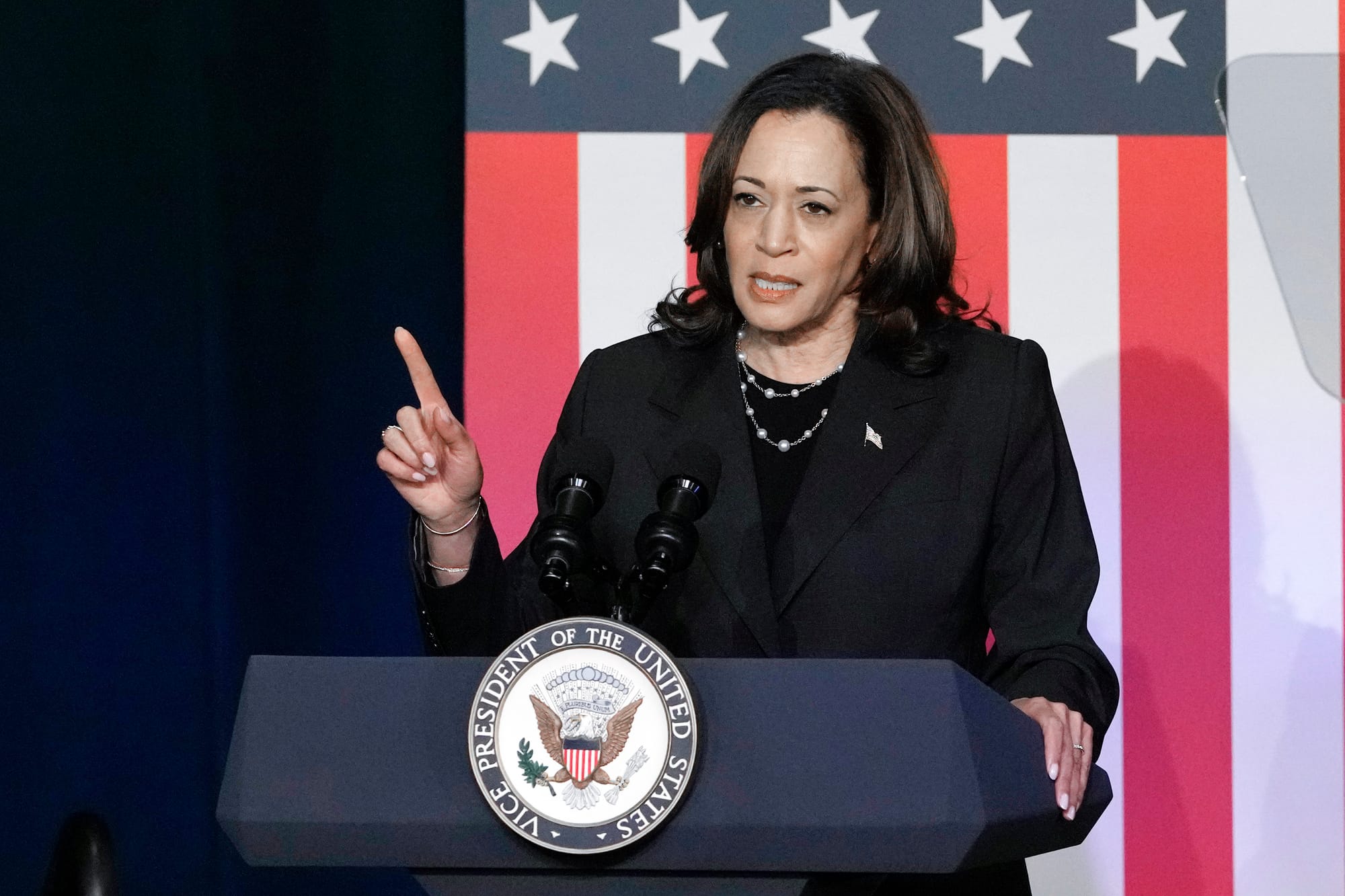
At the Democratic National Convention, Harris continued walking this line. In her speech accepting the Democratic Party nomination, she promised to sign bipartisan border security legislation into law.
“I know we can live up to our proud heritage as a nation of immigrants — and reform our broken immigration system,” she said. “We can create an earned pathway to citizenship — and secure our border.”
As president, Biden has cracked down on illegal crossings at the U.S.-Mexico border. In early September, the New York Times reported he was considering making it tougher to enter the country without a visa by permanently blocking most asylum claims. This year, the numbers have dropped to their lowest point in years. (Because of the economic importance of immigration, some experts also worried about how Biden’s policies could impact the economy, Politico reported.)
Biden tasked Harris with addressing immigration. In 2021, she visited the Northern Triangle, the area of Central America where many recent immigrants originate. She spearheaded the Biden administration’s attempt to address poverty, violence and corruption in the area, the so-called “root causes” of immigration. When she visited Guatemala, Harris told those looking to journey to the U.S.: “Do not come.”
In his 2025 budget, Biden said he’d address immigration by hiring more than a thousand new border patrol agents and about 400 immigration judges to reduce the case backlog. In the Democratic Party platform, released for its convention, party leaders said it would “explore opportunities to identify or create work permits for immigrants, long-term undocumented residents, and legally processed asylum seekers in our country.”
Xiuhtecutli, with the National Sustainable Agriculture Coalition, said the Biden administration probably eased concerns for undocumented immigrants who had lived in the U.S. for decades, mostly because the population was not a near-constant target of powerful politicians.
“There was some relief, at least in the sense that it wasn’t being talked about as openly,” he said, “but, in the community, there’s still the perception that the border was still going to be a hot zone, that it was difficult to cross, still.”
Some farmworker advocates are hopeful for what a Harris administration could mean. When it endorsed Harris, UFW, the California-based farmworker union, said Harris was the “best leader to defeat Donald Trump and to continue the transformative work of the Biden-Harris administration.” Biden, it added, had been the “greatest friend” the union had.
Solis, who is a UFW member, said she hopes Harris continues the policies Biden implemented and possibly goes further. Trump’s rhetoric stigmatized her and her family, she said, particularly when he said he’d end the birthright citizenship of her sons.
“I would tell him — with all due respect because he was president — he does not know how much he has hurt them with the way he expresses himself,” she said.
Mónica Cordero and Jennifer Bamberg contributed to this story.
This article is part of U.S. Democracy Day, a nationwide collaborative on Sept. 15, the International Day of Democracy, in which news organizations cover how democracy works and the threats it faces. To learn more, visit usdemocracyday.org.
Interviews/statements
Tom Bressner, Wisconsin Agri-Business Association, July 17, 2024
Mary Jo Dudley, Aug. 7, 2024
Antonio De Loera-Brust, Aug. 19, 2024
Laurie Beyranevand, Aug. 21, 2024
Nezahualcoyotl Xiuhtecutli, Aug. 21, 2024
Gloria Solis, through an interpreter, Sept. 6, 2024
Anthony Porpiglia, through his attorneys, email response, Sept. 6, 2024
Dairy Business Association, email response, Aug. 16, 2024
American Farm Bureau Federation, email response, Aug. 19, 2024
National Corn Growers Association, email response, Aug. 21, 2024
National Milk Producers Federation, email response, Aug. 22, 2024
The Meat Institute, email response, Aug. 27, 2024
Investigate Midwest reporting
“These farmworkers were forced to labor on empty stomachs,” Investigate Midwest/Columbia Missourian, 2019
“Cheap chicken, beef came at a cost. How American meat plants bred coronavirus hot spots.” Investigate Midwest/USA TODAY, 2020
“North Carolina is driving much of the H-2A program’s growth. That means more exposure to what workers call the ‘green monster.’” Investigate Midwest, 2021
“PAIN DENIED: At one of the country’s largest meatpacking plants, workers say their injuries were ignored,” Investigate Midwest, 2021
“In Washington, agriculture policymakers circulate among Farm Bureau, USDA and industry,” Investigate Midwest, 2022
“Her foot was crushed on the job. When she asked to be compensated for lost wages, ‘they said no.’” Investigate Midwest, 2022
“Is building a CAFO ‘agricultural’ work? One company has asked the Supreme Court to decide,” Investigate Midwest, 2023
“Exposed,” Univision Noticias/Investigate Midwest, 2024
“GRAPHIC: Political party gap in agribusiness donations continues to widen,” Investigate Midwest, 2024
“The US labor department added new farmworker protections, but agency needs more resources ‘to do what we need to do,’ agency head says,” Investigate Midwest, 2024
“GRAPHIC: Hiring foreign visa workers skyrockets at meatpacking plants,” Investigate Midwest, 2024
Other news reports
“Listen to Children Who’ve Just Been Separated From Their Parents at the Border,” ProPublica, 2018
“Immigration raids in Nebraska, Minnesota target businesses,” Associated Press, 2018
“Why It’s Immigrants Who Pack Your Meat,” The Atlantic, 2019
“Trump country farmers feel the heat as feds intensify immigration crackdown,” MPR News, 2019
“After ICE Raids, a Reckoning in Mississippi’s Chicken Country,” The New York Times, 2019
“Harris on ag issues: Strong on farmworker protections, against the USMCA,” Successful Farming, 2020
“Biden administration ends mass worksite immigration raids,” CNN, 2021
“What Is DACA? And Where Does It Stand Now?” The New York Times, 2022
“Biden immigration enforcement memo prioritizes family unity, replaces Trump guidance,” Reuters, 2022
“Farmers push for immigration reform to counter labor shortages and rising food prices,” NBC News, 2022
“Biden Administration Plans Crackdown on Migrant Child Labor,” The New York Times, 2023
“Sweeping Raids, Giant Camps and Mass Deportations: Inside Trump’s 2025 Immigration Plans,” The New York Times, 2023
“UFW files unfair labor practice charge against Ulster County farm for alleged ‘intimidation,’” Times Union, 2023
“As farmworkers form first unions in NY, rights of H-2A workers questioned,” Times Union, 2023
“America’s Dairyland: Risking Workers Lives for the Milk We Drink,” ProPublica, 2023
“Grain entrapment, livestock waste handling injuries and deaths on the rise,” Successful Farming, 2023
“Ostrom mushroom workers in Sunnyside rally again for union recognition,” Yakima Herald-Republic, 2023
“Trump vows to end birthright citizenship for children of immigrants in US illegally,” Reuters, 2023
“Biden Finally Got Border Numbers Down. Will He See the Political Benefits?” The New York Times, 2024
“Trump explains his militaristic plan to deport 15-20 million people,” CNN Politics, 2024
“Trump took a private flight with Project 2025 leader in 2022,” The Washington Post, 2024
“Trump claims not to know who is behind Project 2025. A CNN review found at least 140 people who worked for him are involved,” CNN Politics, 2024
“Trump floats eliminating U.S. income tax and replacing it with tariffs on imports,” CNBC, 2024
“Undocumented Immigrants in US Pay Nearly $100 Billion in Taxes,” Bloomberg Tax, 2024
“Presented with rise in border crossings, Kamala Harris chose a long-term approach to the problem,” Associated Press, 2024
“The facts about Kamala Harris’ role on immigration in the Biden administration,” CBS News, 2024
“Biden border crackdown could snip economy,” Politico, 2024
“Rural voters are (mostly) Trump voters, new poll shows: Why Biden suffers outside cities,” USA TODAY, 2024
“From blue to red in a generation, Upper Midwest's Driftless Area flexes political muscle,” Minnesota Star-Tribune, 2024
“Ron DeSantis is right; Barack Obama deported more people than Donald Trump did,” Politifact, 2024
“Missouri Farm Bureau endorses candidates for August 6th Election,” KQ2 ABC, 2024
“After Historic Union Wins, Farmworkers in New York Face Stiff Resistance to Organizing,” Documented, 2024
“US judge blocks Biden rule on H-2A farmworker union organizing,” Reuters, 2024
“Labor Department Seeks Clarity on Blocked H-2A Farmworker Rule,” Bloomberg Law, 2024
“Foreign Farmworker Safeguards in Doubt as DOL Tests Its Power,” Bloomerg Law, 2024
“DOL Loses Bid to Narrow Order Blocking Foreign Farmworker Rule,” Bloomberg Law, 2024
“Read Kamala Harris’ full speech at the Democratic National Convention,” PBS News, 2024
“Biden Administration May Cement Asylum Restrictions at the Border,” The New York Times, 2024
“About Joseph Grendys,” Forbes, undated
Academic studies
“U.S. Farm Policy as Fraught Populism: Tracing the Scalar Tensions of Nationalist Agricultural Governance,” Annals of the American Association of Geographers, 2019
“UCLA faculty voice: Largest deportation campaign in U.S. history is no match for Trump’s plan,” UCLA Newsroom, 2017
“How ‘food security’ is quickly becoming national security,” Arizona State University News, 2021
“National food security, immigration reform, and the importance of worker engagement in agricultural guestworker debates,” Journal of Agriculture, Food Systems, and Community Development, 2022
“The Link Between Consumer Prices, Labor Costs, and Immigration in the U.S.: Bivariate Associations,” Texas A&M International University, 2022
“Documenting working experiences of agriculture workers in California,” International Journal of Society of Agriculture & Food, 2023
“The Labor Market Effects of Immigration Enforcement,” Journal of Labor Economics, 2024
“Tax Payments by Undocumented Immigrants,” Institute on Taxation and Economic Policy, 2024
Government publications
“H-2A Agricultural Worker Visa Modernization Joint Cabinet Statement,” U.S. Department of Agriculture press release, 2018
“Findings from the National Agricultural Workers Survey (NAWS) 2019–2020: A Demographic and Employment Profile of United States Farmworkers,” U.S. Department of Labor report, 2022
“Worksite Enforcement: The Strategy to Protect the American Labor Market, the Conditions of the American Worksite, and the Dignity of the Individual,” U.S. Department of Homeland Security memorandum, 2021
“FACT SHEET: Biden-Harris Administration Releases National Security Memorandum to Strengthen the Security and Resilience of U.S. Food and Agriculture,” The White House, 2022
“DHS Announces Process Enhancements for Supporting Labor Enforcement Investigations,” U.S. Department of Homeland Security press release, 2023
“H-2A Temporary Agricultural Program — Selected Statistics, Fiscal Year (FY) 2023,” U.S. Department of Labor, Office of Foreign Labor Certification, 2023
“Sunnyside mushroom farm will pay $3.4 million for violation the civil rights of its workers,” Washington State Office of the Attorney General press release, 2023
“FACT SHEET: The President’s Budget for Fiscal Year 2025,” The White House, 2024
“Farm Laborers Fair Labor Practices Act,” New York State Department of Labor, webpage undated
NGO reports/press releases
“The impact of immigration barriers on native workers: Evidence from the US exclusion of Mexican braceros,” Centre for Economic Policy Research, 2017
“Undocumented Immigrants in the Food Supply Chain,” Center for American Progress, 2021
“National Agricultural Workers Survey 2019-2020 Selected Statistics,” Farmworker Justice, 2022
“UFW Condemns Porpiglia Farm Owners’ intimidation of workers and threats against UFW organizer,” United Farm Workers press release, 2023
“Explainer | The Ongoing Harms of Trump-era Mississippi Raids and Immigration Prosecutions,” National Immigrant Justice Center, 2024
“United Farm Workers Endorses Vice President Kamala Harris for President,” United Farm Workers press release, 2024
“Trump’s proposed mass deportations would backfire on US workers,” Peterson Institute for International Economics blog, 2024
ETA-790A Form (job order for H-2A program), Porpiglia Farms, 2024
“‘24 Democratic Party Platform,” Democratic Party, 2024
“Biden’s Labor Department withdraws Trump administration’s final rule on H-2A guest worker program,” Farmworker Justice press release, undated
“Policy Agenda” documents, Project 2025, undated
Staff Directory, American Farm Bureau Federation website
“2024 Elections & Endorsements,” Michigan Farm Bureau website, undated
“Crush injuries,” Farm Injury Resource Center, undated