More than a third of the world’s corn supply comes from America’s Corn Belt, a region of sprawling grain fields stretching from Nebraska to Ohio.
But most of the seed varieties planted in those midwestern fields were first tested and researched in Puerto Rico, the small Caribbean island that has sacrificed much of its own agricultural resources to meet the growing needs of major U.S. crop producers.
Several seed companies and researchers use farmland in Puerto Rico to breed and genetically engineer high-yielding, pest-resistant and herbicide-tolerant seeds. Eighty-five percent of all seeds used in the global seed chain pass through Puerto Rico at some point, according to the Puerto Rico Agricultural Biotechnology Industry Association (PRABIA).
However, some Puerto Ricans believe these seed companies are exploiting the island’s resources without providing meaningful economic benefits in return, given the generous tax incentives and regulatory concessions they receive from the local government.
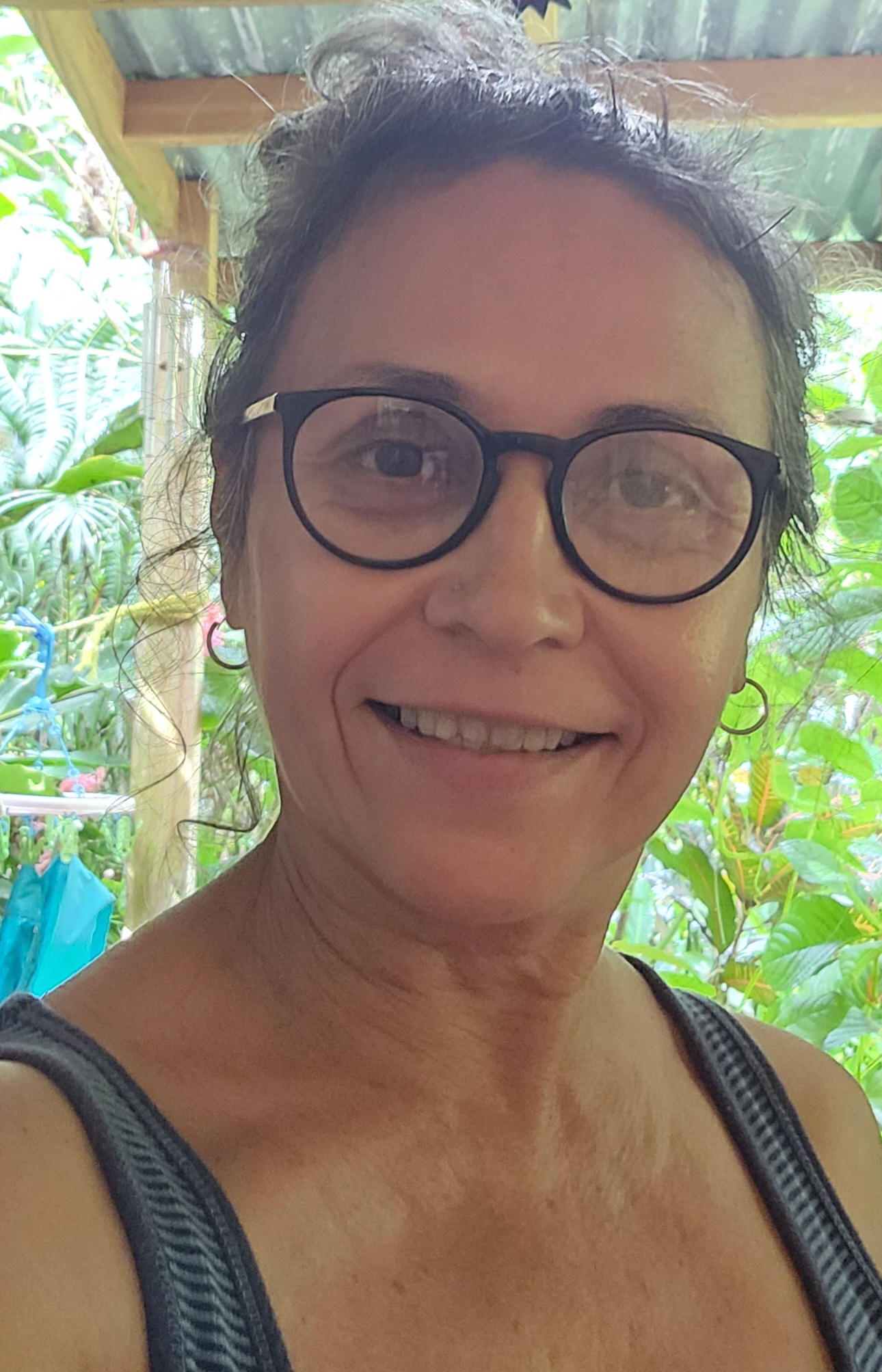
“They don’t produce food, but they are using the resources that we need to produce food,” said Magha Garcia, an organic farmer and a member of the Boricuá Organization of Ecological Agriculture, an organization that opposes corporate agriculture and advocates for more localized, organic food and farming.
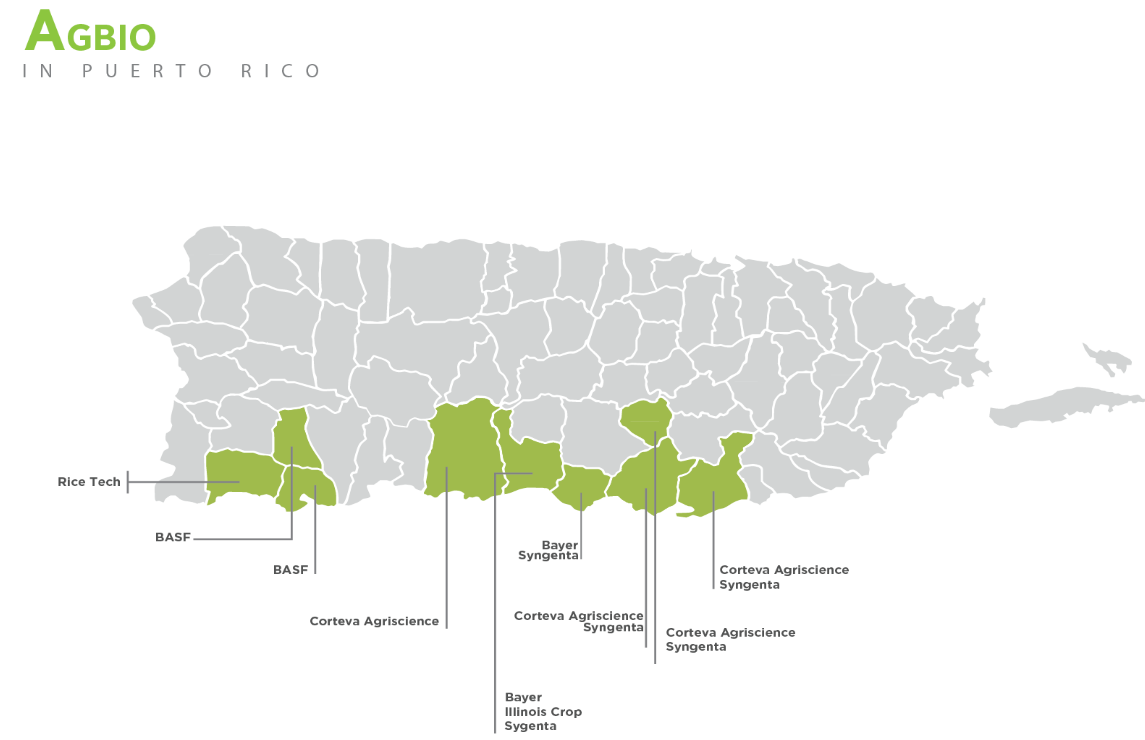
Over the last 30 years, thousands of acres of test farms have been opened in Puerto Rico by agribusiness giants like Bayer, Corteva Agriscience, Syngenta and BASF, which combined control more than half of the global seed market. The total economic output of corn to the U.S. economy was $123 billion in 2024, according to the National Corn Growers Association.
Puerto Rico, however, hasn’t seen the same benefits. PRABIA reported employing about 2,900 people and generating $284 million in economic activity in 2024. The association also said ag-bio collectively paid $9.3 million in taxes in 2024 – a low amount considering the more than $22 billion earned in crop science sales by Bayer alone that same year.
Puerto Rico’s own agriculture has been in decline since the 1940s, when a joint government initiative between the U.S. and Puerto Rico, called “Operation Bootstrap,” sought to transform the island from an agrarian to an industrial society.
As a result of industrialization, farmers and farm workers were forced to move into cities or leave the island for the U.S. mainland in search of employment. Today, the island imports 85% of its food, despite having a favorable farming climate.
Yaminette Rodriguez, a retired USDA agronomist and resident of Salinas, said the relationship between seed companies and Puerto Rico is one-sided. “They don’t sell the seeds over here,” she said. “We are just a place where they can produce seeds all year.”
Rodriguez said the biggest challenge Puerto Ricans face in building up local agriculture is that the government prioritizes incentivizing ag-biotech over small farms.
The government has relied heavily on corporate tax exemptions, credits and worker wage subsidies to entice corporations to come to the island, including a 90% income tax exemption for corporations.
However, Garcia, from the Boricuá Organization of Ecological Agriculture, said increased corporate presence on the island has not translated to an improvement in the quality of life for Puerto Ricans.
“Puerto Ricans, we have struggles everywhere. We are basically surviving,” she said.
The island’s poverty rate is more than twice that of Mississippi, the poorest U.S. state. Puerto Ricans are also paid 40% to 60% less on average than American workers, a statistic advertised by Puerto Rico’s Department of Economic Development and Commerce to encourage companies to hire skilled talent at a lower cost.
Six foreign corn companies currently rent a total of 5,225 acres of land along the island’s south coast, according to a 2024 study by research firm Estudios Técnicos.
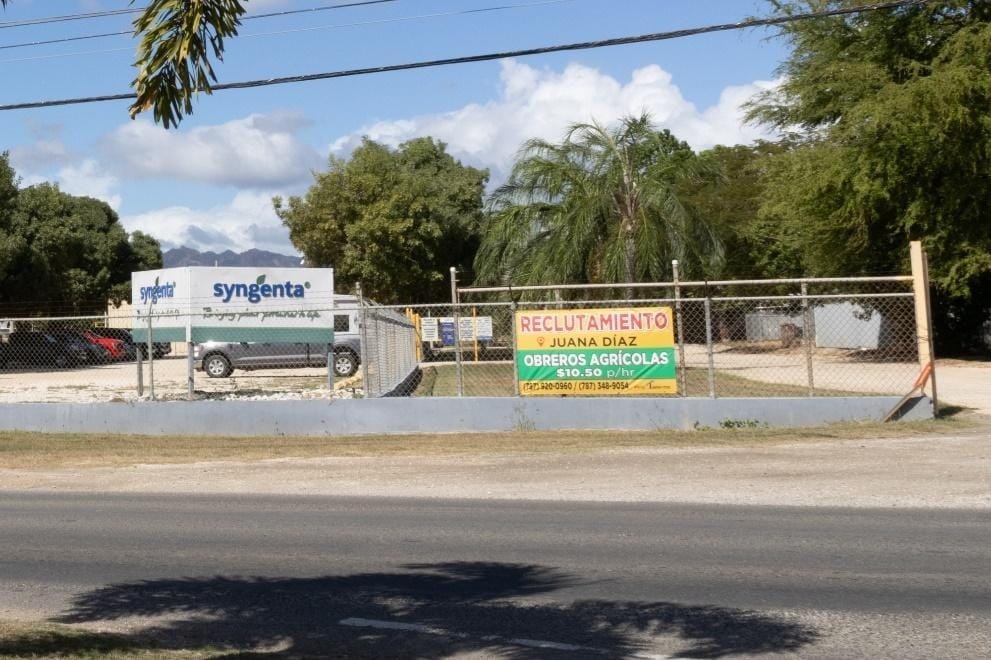
Illinois, the second-largest corn-producing state, has been a key partner to the seed industry in Puerto Rico. In fact, the Illinois Crop Improvement Association, the state’s official seed certification agency, has a 200-acre winter nursery in Juana Díaz, a municipality on the island’s south coast.
It is the only nonprofit seed research station in Puerto Rico, providing third-party winter seed breeding and growout services to help plant breeders conduct year-round research for business or academic purposes.
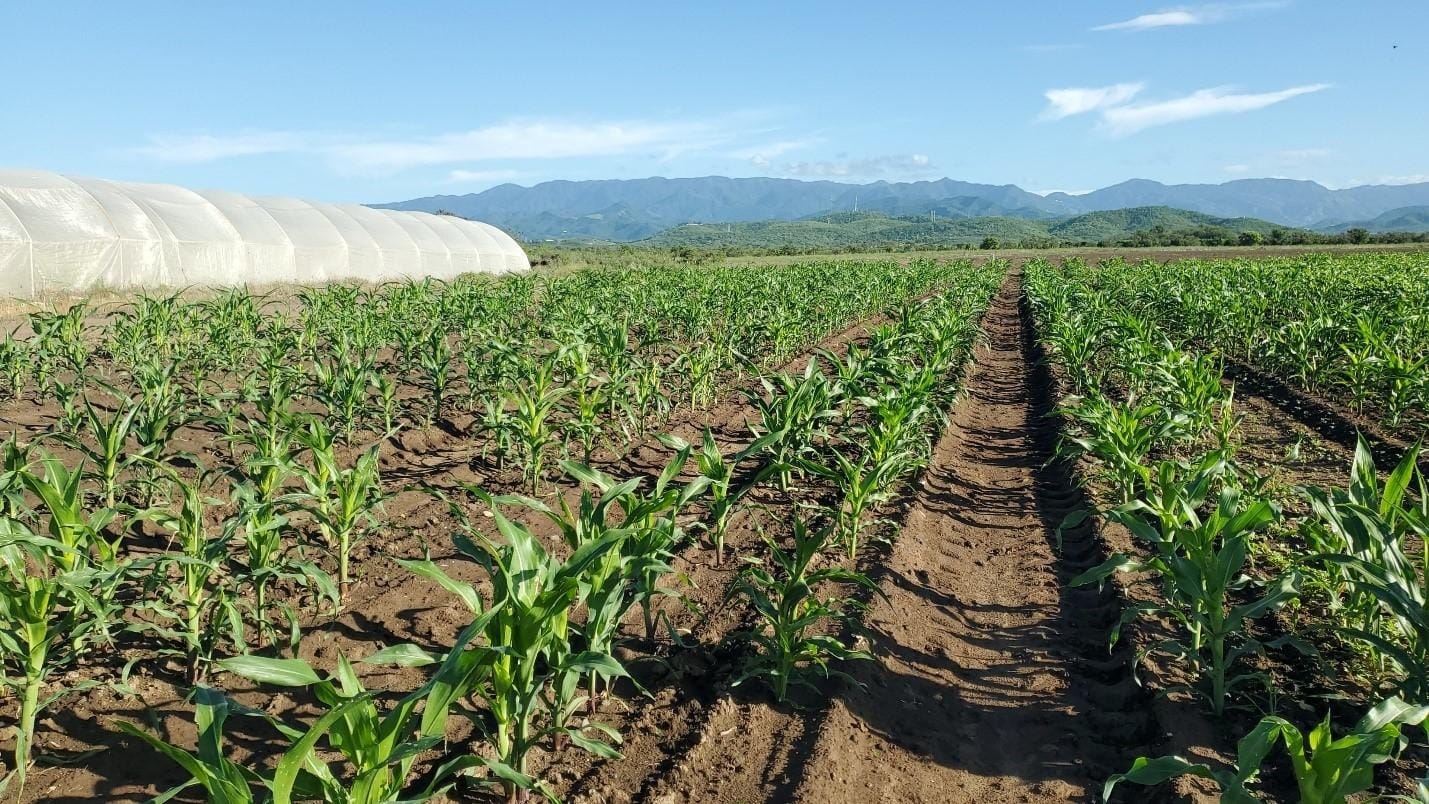
“We work with a lot of people from the Midwest,” said Lizandro Perez, the farm’s station manager. Every week, Perez and his small team of agronomists in Puerto Rico convene over Zoom with their main office in Champaign, Illinois, to discuss the continuous shipping and management of seeds to and from their farm throughout the year.
Illinois Crop Improvement Association CEO Doug Miller said the customers they serve range from university researchers and small-scale seed breeders to the largest seed companies on the island, but mostly include plant breeders from Illinois or other parts of the U.S. who would otherwise get only one growing season per year in their home environments.
“We just did a buckwheat increase for someone, and they sent us 14 ounces of seed, and we generated 14 pounds to send back to them,” Miller said. “It’s not without its challenges, but that’s a primary means of supporting Illinois agriculture.”
America’s corn boom and how the seed industry came to Puerto Rico
Indigenous Americans have cultivated corn and its wild ancestor, teosinte, for thousands of years, originating the practice of selective breeding to develop hundreds of heirloom corn varieties.
In the 1800s, white settlers in the American West adopted the practice of corn farming and seed selection by saving the seeds of the strongest crops at the end of each season to plant the following year.
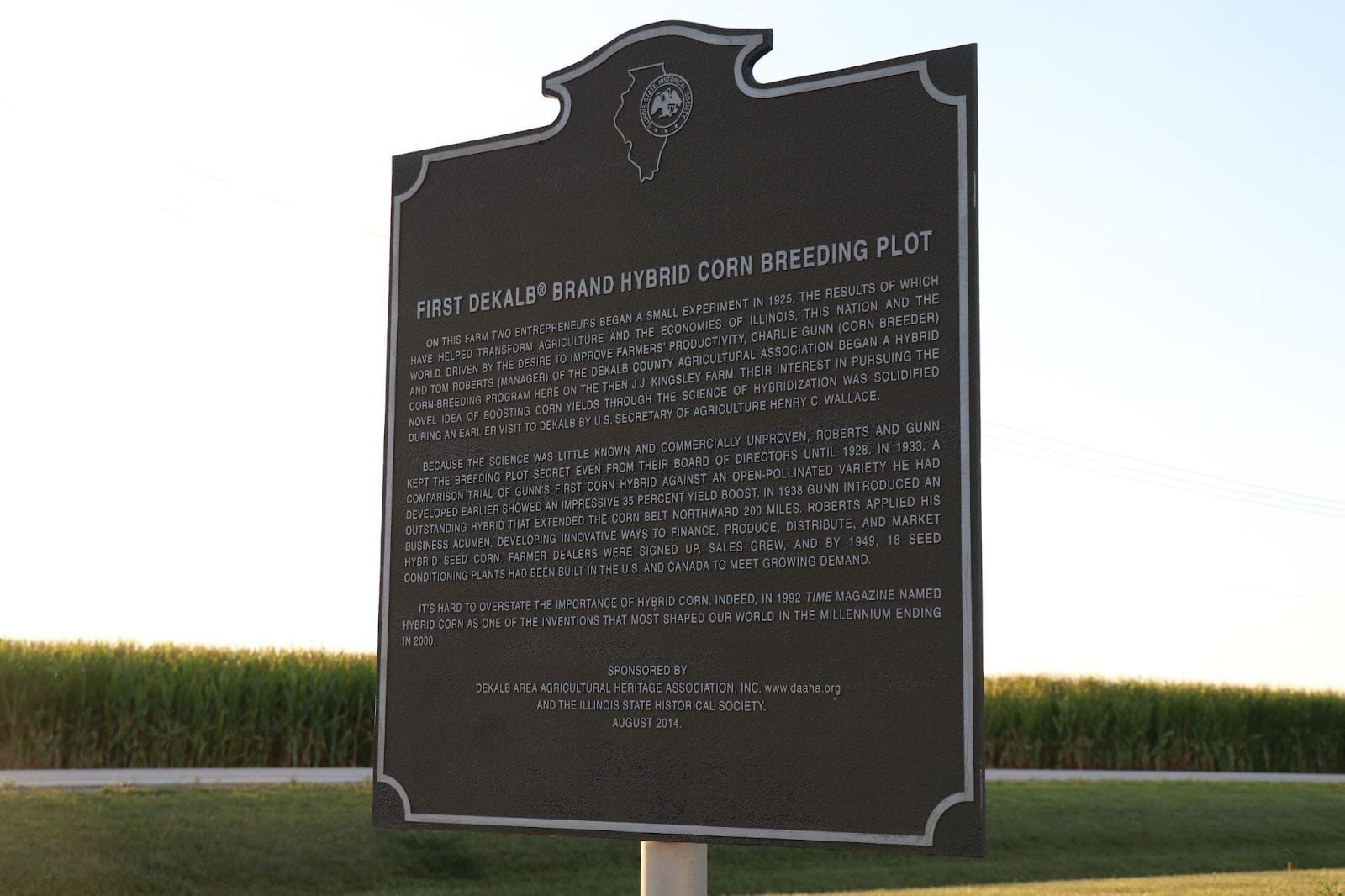
In the 1930s, plant geneticists began developing hybrid seeds by crossing two inbred corn varieties, or self-pollinated corn, to create a new variety with more desirable traits, such as bigger ear size and drought resistance.
Seeing the immense market opportunity for hybrids, prominent geneticist Henry A. Wallace founded Pioneer Hi-Bred, the first commercial producer of hybrid corn seeds. In the following decades, plant breeders rushed to bring their own hybrid seed varieties to market. By 1965, nearly all U.S. corn acres were planted with hybrid seeds.
Over the second half of the 20th Century, corn farmers increased production to meet global demand for feed grains, biofuels and other corn-based products. Large seed companies also expanded intellectual property protections, enabling them to seize greater control over hybrids and the emerging GMO seed market.
In 1996, the U.S. also passed the Federal Agriculture Improvement and Reform (FAIR) Act, which allowed farmers to make crop planting decisions based on the most profitable crop in a given year. With growing global demand for ethanol, farmers invested more heavily in corn acreage.
As a result of incremental advances in plant breeding, yields have increased by an average of 1.8 bushels per acre per year since the 1930s and are projected to reach a record 186.7 bushels per acre for 2025.
The first field trials for genetically modified or transgenic crops brought seed companies to Puerto Rico. By crossing plant genes with a bacterium that produces a toxin deadly to insects, seed makers could reduce crop loss from pests. Seeds were also bred for herbicide tolerance.
Puerto Rico’s tropical climate offered seed companies a year-round environment that accelerated seed research and development. Its status as a U.S. territory gave it an advantage over other foreign tropical regions, according to the Illinois Crop Improvement Association.
Its close proximity to the mainland also made it easier and cheaper than transporting seeds from Hawaii, another major site for corn and soybean production.
In 1983, the Asgrow Seed Company (later acquired by Monsanto) opened a permanent seed research facility in Isabela, Puerto Rico., Illinois Crop Improvement established its winter farm in Juana Diaz in 1986, followed by Pioneer Hi-Bred (now Corteva) in Salinas in 1989.
Monsanto was issued its first Puerto Rico GMO seed trial permits in 1989, leading to the development of the first glyphosate-tolerant soybean in 1993.
University of Illinois commercial agriculture specialist Talon Becker said that seed research in Puerto Rico helps significantly shorten the research and development process for bringing new seed varieties to market, which can take 10 years or longer.
“You have to find those specific gene combinations that just happen to yield better on a larger scale than the other ones,” Becker said. “If you can do that in three generations in a tropical place, you can get a whole lot more seed per year than you can in Illinois.”
Puerto Rico now ranks No. 1 in total transgenic crop permits of any state or U.S. territory issued during the last five years, according to Invest Puerto Rico.
Pesticide pushback
Environmental risks associated with pesticide and herbicide use by seed companies have also been vocally opposed by Puerto Ricans.
Ruth Santiago, a community and environmental lawyer in Salinas, said a main area of concern is the contamination of drinking water in the south coast aquifer, the primary water supply for municipalities from Patillas to Ponce.
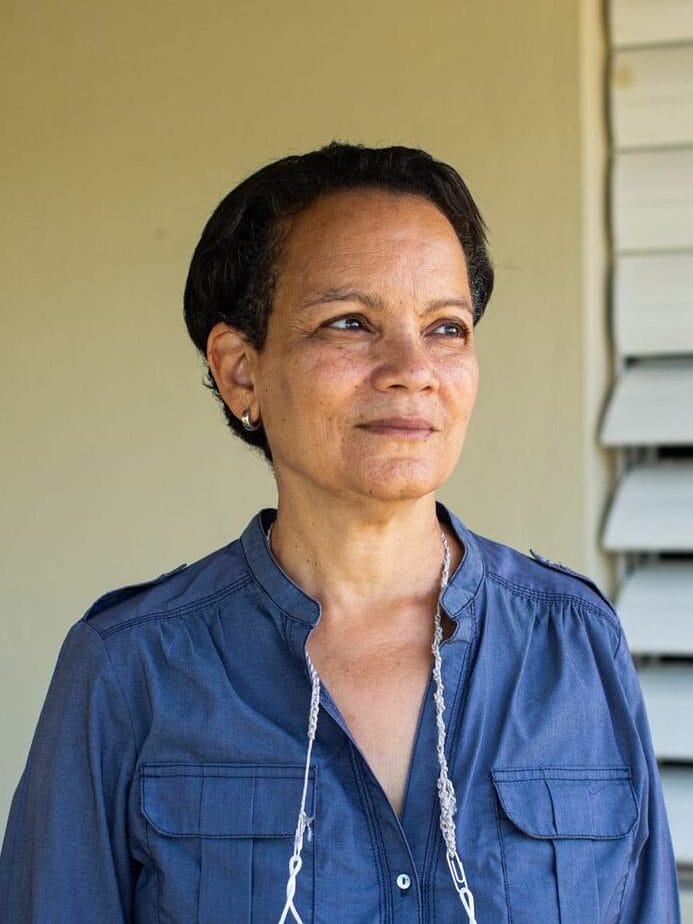
“Here in Salinas, we depend exclusively on groundwater for human consumption,” Santiago said. “Our drinking water comes from the aquifer, and so it’s very critical that we protect the quality of the water.”
A 2011 study by the National Oceanic and Atmospheric Administration (NOAA) found evidence of pesticide contamination in the Jobos Bay watershed, an estuary and mangrove reserve connected to the south coast aquifer. The primary pesticide found in the watershed was Syngenta’s atrazine, the second-most widely used herbicide after Bayer’s glyphosate. Syngenta has a 200-acre test farm in Salinas, just two miles north of Jobos Bay.
Studies have linked atrazine exposure to endocrine disruption in humans and DNA damage in aquatic species, including those found in Jobos Bay. Contamination poses a threat to human reproductive health and the biodiversity of aquatic ecosystems, according to the Agency for Toxic Substances and Disease Registry.
A 2013 University of Nebraska study has also found a link between atrazine exposure and increased risk of non-Hodgkin's lymphoma when combined with nitrates in drinking water, which results from the use of nitrogen-based fertilizers. Nitrate contamination was also detected in Jobos Bay according to the NOAA study.
Following legal action by the Center for Biological Diversity and Pesticide Action Network against the Environmental Protection Agency (EPA) in 2020, atrazine use is now banned in Puerto Rico.
Some companies on the island have adopted an Integrated Pest Management (IPM) strategy, including Illinois Crop Improvement, which considers pesticide use as a last resort when other control methods are ineffective. But some say the long-term harms of any pesticides outweigh short-term benefits.
“The negative impacts come when they run downstream,” said Daniel Rath, a soil scientist at the Natural Resources Defense Council. “It’s folks that depend on groundwater, that depend on clean air, that are facing the brunt of these negative impacts.”
Future outlook and solutions: from PuertoRico to the Corn Belt
Farmers and activists in Puerto Rico and beyond have called for policies and systems that support local agriculture and sustainable farming, rather than corporations.
Rath said that many of the challenges associated with the seed industry can be attributed to a hyperfocus on one product – in this case, corn – rather than a diversity of crops.
“When you have a monoculture system, very often the one thing you think about is yield; Yield, yield, yield,” Rath said. “The way we used to farm, before the 1970s, yeah there were less yields, but it was way more diversified and environmentally sustainable.”
Today, Rath said farmers are incentivized to engage in more large-scale, industrialized agricultural systems, which provide short-term gains but are ultimately worse for the environment and the land they grow on..
He said building a better system starts with normalizing more diversified farming practices. “For example, in Belize, they don’t think of it as diversified agriculture,” Rath said.“They just think of it as agriculture.”
Becker, the commercial agriculture specialist at the University of Illinois, said there’s been a growing appetite in recent years among Corn Belt farmers to promote soil health and remediate environmental impacts of chemical use, such as reducing nitrogen fertilizer loss and planting cover crops to control pests and diseases. However, he says that any broader, systems-level change will require more aggressive incentives for implementing sustainable practices.
“Agriculture is 12,000 years old, and it’s constantly evolving, right?” Becker said. “But if you’re going to say this is better for the environment, and you want farmers to do it, then there has to be some incentive that matches, if not surpasses the cost.”
Interviews
Yaminette Rodriguez, Salinas resident, retired USDA agronomist, Feb. 7, 2025
Ruth Santiago, Salinas resident, attorney and environmental health advocate, Earthjustice, Feb. 7, 2025
Magha Garcia, organic farmer and activist, Boricuá Organization of Ecological Agriculture, April 22, 2025
Talon Becker, commercial agriculture specialist, University of Illinois Urbana-Champaign, July 11, 2025
Doug Miller, CEO, Illinois Crop Improvement Association, July 18, 2025
Delvin Marrero, Winter Farm Supervisor, Illinois Crop Improvement Association, July 18, 2025
Natalie Bracero, Winter Farm Trait Introgression Supervisor, Illinois Crop Improvement Association, July 18, 2025
Daniel Rath, Agricultural Soil Carbon Scientist, Natural Resources Defense Council, July 25, 2025
Lizandro Perez, Winter Farm Station Manager, Illinois Crop Improvement Association, Aug. 22, 2025
Data and reports
“Corn Farming Contribution to the U.S. Economy,” National Corn Growers Association, June 2025
“Rising U.S. Corn Yields Boost Production Without Additional Land,” Sept. 1, 2023, National Corn Growers Association
“USDA Raises Record Projections for Corn Yield and Production,” Aug. 12, 2025, National Corn Growers Association
2024 annual report, Bayer
“Bringing new markets to Puerto Rico’s producers,” USDA, Jan. 8, 2014
“The Effect of 936,” corporate tax exemptions in Puerto Rico
“Puerto Rico: A U.S. Territory in Crisis,” Council on Foreign Relations, Jan. 8, 2025
“History of Ethanol Timeline,” Renewable Fuels Association
“Endocrine-disrupting Pesticide Atrazine to Be Banned in Hawaii, Five U.S. Territories, Prohibited on Conifers, Roadsides,” Sept. 23, 2020, Center for Biological Diversity